

When we talk about sustainability, conversations often focus on reducing emissions or developing new clean technologies. But true sustainability is also about ensuring people have access to the basic infrastructure that enables communities to thrive. Reliable electricity is one of the most powerful enablers of economic development, education, healthcare, and environmental progress.
That is why the latest milestone from Mission 300 is so encouraging. The initiative, led by the World Bank Group and the African Development Bank, has now helped connect more than 50 million people across 40 African countries to electricity, moving steadily toward its ambitious goal of bringing power to 300 million people by 2030.
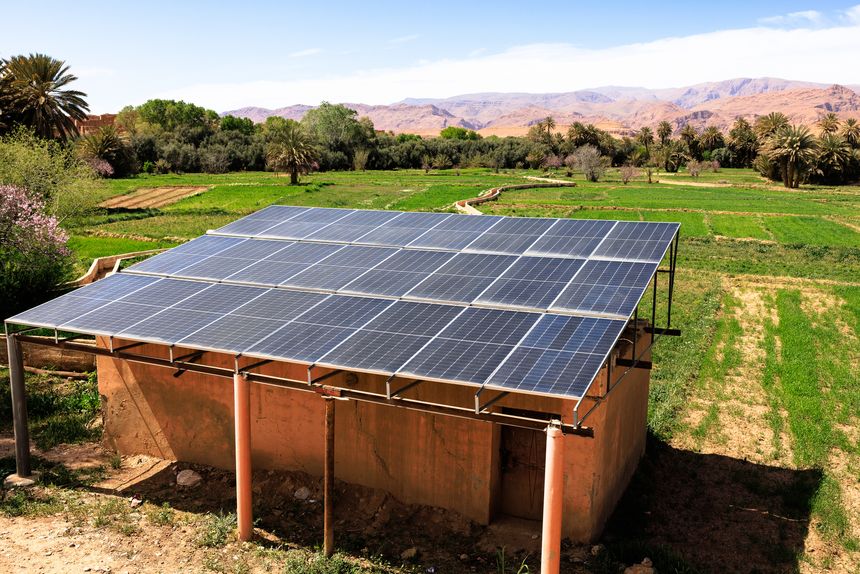
What makes Mission 300 particularly exciting is that it isn't simply about building more power lines. It is taking a holistic approach that combines grid expansion with renewable energy, mini-grids, and standalone solar systems, while encouraging governments, financial institutions, and the private sector to work together to accelerate access. This collaborative model recognizes that sustainable development requires more than technology alone. It requires partnerships, investment, and long-term thinking.
The impact reaches far beyond electricity itself.
Reliable energy allows healthcare facilities to refrigerate vaccines and operate life-saving equipment. It enables students to study after dark and gives schools access to digital learning resources. Entrepreneurs can grow businesses, farmers can reduce food waste through refrigeration, and communities become more resilient through improved access to information, communications, and essential services. In many areas, distributed renewable energy also reduces dependence on expensive diesel generators and traditional biomass fuels, supporting cleaner air and lower carbon emissions.
Several countries are already demonstrating what is possible. Millions of new electricity connections have been established through policy reform, infrastructure investment, and innovative financing models that make energy more affordable and accessible. These successes show that meaningful progress is possible when governments, development organizations, and private businesses align around a common objective.
There is still significant work ahead. Around 600 million people across Sub-Saharan Africa continue to live without reliable access to electricity. Meeting the Mission 300 target will require continued investment, stronger regional cooperation, and sustained private sector participation. Yet reaching the first 50 million connections demonstrates that ambitious global challenges can be addressed when collaboration replaces competition and long-term impact takes priority over short-term gains.
For businesses, this is also an important reminder that sustainable growth depends on resilient infrastructure. Expanding access to clean, reliable energy strengthens supply chains, supports local economies, creates new markets, and helps build more inclusive prosperity. The transition to a sustainable future is not only about reducing our environmental footprint. It is about creating opportunities that allow people, communities, and businesses to grow together.
Sometimes the most transformative innovations are not the newest technologies, but ensuring that millions of people can finally switch on a light.
/Passle/60211dc9e5416a0c14bc63d4/MediaLibrary/Images/2026-10-06-15-14-19-675-6ac5104b954097bad89367d7.jpg)
/Passle/60211dc9e5416a0c14bc63d4/SearchServiceImages/2026-10-14-08-11-38-961-6acf393a477453bcaa310c72.jpg)
/Passle/60211dc9e5416a0c14bc63d4/SearchServiceImages/2026-10-05-13-05-26-086-6ac3a0967533beb6e63d4d89.jpg)
/Passle/60211dc9e5416a0c14bc63d4/SearchServiceImages/2026-10-02-13-32-02-404-6abfb2527f63a687f5e4517c.jpg)