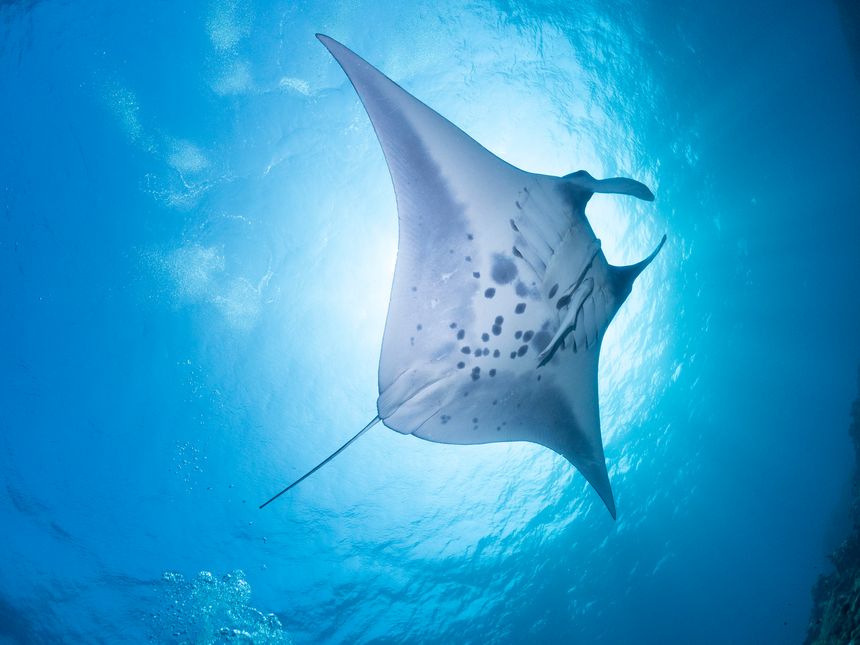

California’s coastline is starting to look a little more tropical than usual. A powerful El Niño, combined with a record-breaking marine heatwave, is warming Pacific waters and bringing some very unusual visitors north.
In September, a venomous yellow-bellied sea snake washed ashore at Crystal Cove in Orange County, only the sixth confirmed sighting of the species in California. A fisherman later caught a longfinned bigeye off the Venice Fishing Pier, the first ever recorded in the state. Whale sharks, hammerhead sharks, olive ridley sea turtles, oceanic manta rays and pilot whales have also been showing up in Southern California waters where they’re rarely seen.
The reason is unusually warm water. El Niño weakens the coastal upwelling that normally pulls cold, nutrient-rich water toward the surface. That makes California more inviting to tropical species, but it also reduces nutrients that support plankton and the rest of the marine food chain.
Unfortunately, what’s good news for exotic visitors can be very bad news for California’s regular residents. Scientists at the Scripps Institution of Oceanography are already seeing stress on kelp forests near San Diego, while changing food supplies have contributed to starving seabirds along the coast. And with this El Niño still months from its expected peak, California could be in for even more strange sightings.
So if you’re headed to a Southern California beach and spot something that looks like it belongs several hundred miles farther south, your eyes might not be playing tricks on you.