

Microplastics have become one of the most pervasive environmental challenges of our time. These tiny plastic particles have been detected in oceans, rivers, soil, food, and even drinking water, raising growing concerns about their impact on ecosystems and human health. While researchers and governments continue to search for scalable solutions, one promising innovation has emerged from an unexpected source: a group of teenagers and a common kitchen ingredient.
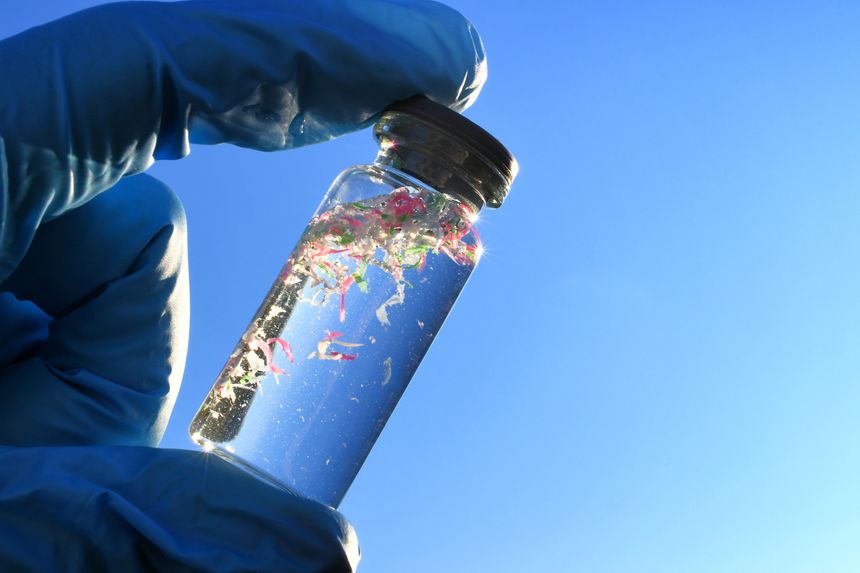
Three 16-year-old students from India, Vivaan Chhawchharia, Ariana Agarwal, and Avyana Mehta, were named Asia winners of The Earth Prize for developing "Plas-Stick," a biodegradable powder made from waste tamarind seeds that helps remove microplastics from water. Their innovation causes microplastic particles to clump together, making them easy to extract using a handheld magnet. The approach is simple, low-cost, and designed to work without complex filtration systems or significant infrastructure requirements.
What makes this solution particularly compelling is its accessibility. Tamarind seeds are an agricultural byproduct that would otherwise be discarded, transforming waste into a practical environmental tool. The students developed the concept after becoming concerned about microplastic contamination in drinking water and worked with researchers to test and refine the technology. Early demonstrations have shown promising results, and funding from The Earth Prize will support further development and real-world testing.
The story highlights an important reality about sustainability innovation: breakthrough ideas do not always originate from large corporations or research institutions. Sometimes they come from fresh perspectives that challenge conventional thinking. By combining readily available materials with scientific curiosity, these young innovators have created a solution that could potentially make clean water more accessible in communities where advanced treatment technologies are not practical.
As environmental challenges become increasingly complex, stories like this offer a reminder that innovation can emerge from anywhere. Whether addressing plastic pollution, resource scarcity, or climate resilience, the next generation is already demonstrating that sustainable solutions can be both effective and remarkably simple.
/Passle/60211dc9e5416a0c14bc63d4/SearchServiceImages/2026-09-27-17-44-10-859-6ab955eaef3ecc8443aa618d.jpg)
/Passle/60211dc9e5416a0c14bc63d4/SearchServiceImages/2026-10-14-08-11-38-961-6acf393a477453bcaa310c72.jpg)
/Passle/60211dc9e5416a0c14bc63d4/MediaLibrary/Images/2026-10-06-15-14-19-675-6ac5104b954097bad89367d7.jpg)
/Passle/60211dc9e5416a0c14bc63d4/SearchServiceImages/2026-10-05-13-05-26-086-6ac3a0967533beb6e63d4d89.jpg)