

The idea sounds like science fiction.
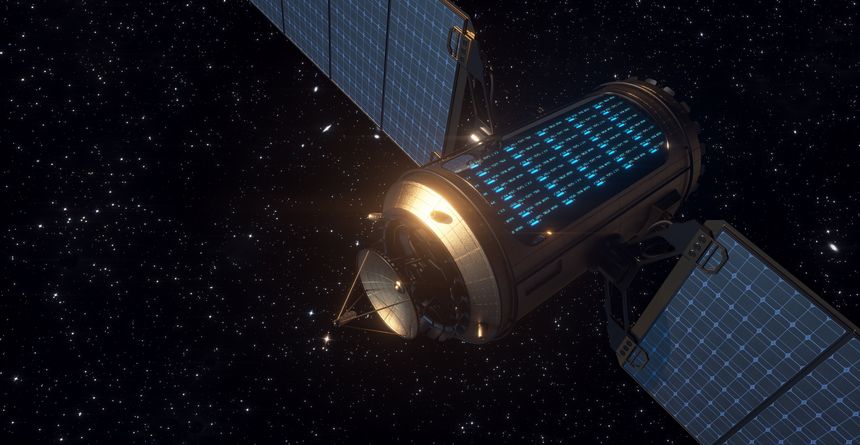
Imagine vast constellations of AI-powered data centers orbiting Earth, fueled by abundant solar energy and free from many of the risks facing terrestrial infrastructure. Companies including SpaceX, Google, and startups such as Starcloud are actively exploring this vision, betting that the future of computing may extend beyond our atmosphere.
At first glance, orbital data centers appear to align perfectly with a sustainable future. They avoid competing for increasingly constrained land and grid resources, can access continuous solar energy, and could process data closer to where it is generated in space.
But a recent IEEE Spectrum article offers an important reminder for engineers and sustainability professionals alike:
Technology does not eliminate physics.
And physics always sends a bill.
The Sustainability Question
As AI adoption accelerates, data centers are becoming one of the world's fastest-growing consumers of energy. This has sparked a search for new approaches to computing infrastructure, including the possibility of moving some workloads into orbit.
However, sustainability is not simply about where an asset operates, it's about understanding the full lifecycle of the system. From where the materials required, to the energy consumed, the maintenance demands, and even the infrastructure needed to keep it functioning.
This is where the orbital data center concept becomes particularly interesting.
While space offers abundant solar energy, it removes one of the most effective cooling mechanisms available on Earth: convection. In orbit, excess heat can only be removed through radiation, requiring large radiator systems that add significant mass, complexity, and cost.
Building Better Means Understanding Constraints
One of the most valuable lessons from the article is that innovation succeeds when it acknowledges constraints rather than ignores them.
Many emerging technologies are initially promoted through their benefits and space-based data centers are no exception. Advocates point to continuous solar power, avoidance of terrestrial disruptions, and the ability to process satellite data directly in orbit.
Yet, the analysis demonstrates that every watt of computing power ultimately becomes a watt of heat that must be managed. Large AI workloads require enormous cooling surfaces, and those surfaces degrade over time due to ultraviolet radiation and the harsh orbital environment.
For those of us working in engineering, compliance, and sustainability, this should sound familiar.
Whether we are evaluating a robotic system, an industrial machine, or an innovative space technology, success depends on identifying hidden constraints early and designing for them. Building back ever better requires more than ambition. It requires engineering realism.
Maintenance May Become the Deciding Factor
Perhaps the most overlooked insight from the article is the role of maintenance.
Traditional satellites have often followed a "launch and forget" philosophy. Once degradation reaches a critical point, the asset is effectively retired. With orbital computing that will likely require a completely different model. The new model will be one based on servicing, upgrading, and maintaining infrastructure in space.
We increasingly recognize that sustainability is not achieved by constantly replacing assets, and is achieved by extending useful life through effective maintenance, repairability, and lifecycle management. The same principle may ultimately determine whether orbital data centers succeed.
If future space infrastructure can be serviced, refurbished, upgraded, and maintained, the economics and sustainability case become much stronger. If not, the industry risks creating a highly sophisticated version of a disposable asset model.
The Bigger Opportunity
Interestingly, the greatest value of space-based computing may not be running large language models in orbit at all.
The article suggests that the strongest business cases involve processing data directly where it is generated. Analyzing Earth observation data, supporting collision avoidance, and enabling autonomous decision-making within increasingly crowded orbital environments may all turn out to be useful applications of orbital data centers.
In other words, the future may not be about moving all computing to space. Instead, it may be about putting the right computing in the right place.
That distinction matters because sustainable innovation is rarely about maximizing technology. It is about optimizing systems.
Final Thoughts
The concept of orbital data centers is exciting, ambitious, and potentially transformative. But the article highlights a timeless engineering truth:
The future belongs not to those who ignore constraints, but to those who design intelligently around them.
As we continue to build back ever better, the goal should not be to pursue innovation for its own sake. It should be to create systems that are resilient, maintainable, efficient, and sustainable over their entire lifecycle.
Whether on Earth or in orbit, the challenge remains the same.
The real breakthrough is not computing more.
It's doing more with less.
/Passle/60211dc9e5416a0c14bc63d4/SearchServiceImages/2026-09-30-09-58-32-552-6abcdd48e74bcfda1242f62a.jpg)
/Passle/60211dc9e5416a0c14bc63d4/SearchServiceImages/2026-09-23-19-13-10-899-6ab424c6f84433e70eea14a5.jpg)
/Passle/60211dc9e5416a0c14bc63d4/SearchServiceImages/2026-09-25-13-57-46-518-6ab67dda84411a8068278896.jpg)
/Passle/60211dc9e5416a0c14bc63d4/SearchServiceImages/2026-09-30-17-56-55-315-6abd4d679f08a2dbc96d1b1f.jpg)