

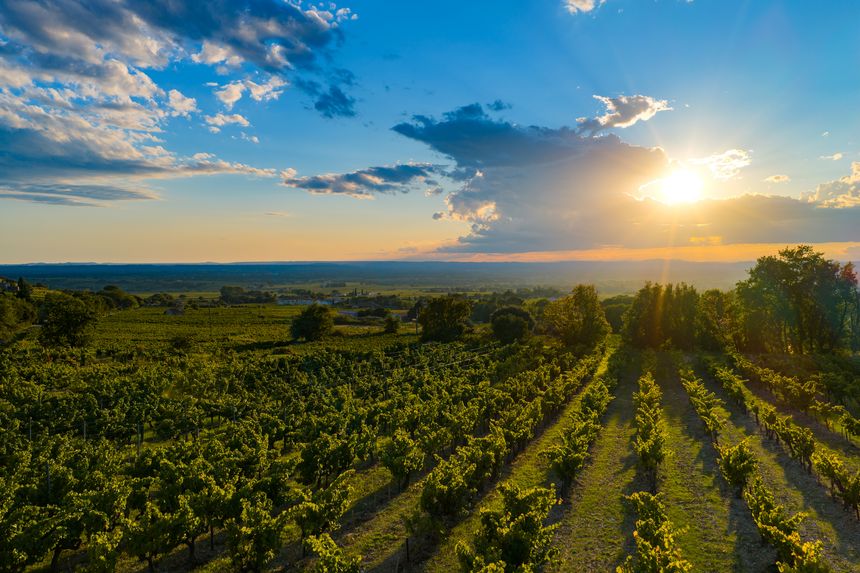
Recent reports suggest that France could face one of its lowest wine harvests in decades following another summer of extreme heat and drought. Yet alongside this challenge, an interesting story of adaptation and innovation is beginning to emerge.
In response to changing growing conditions, some winemakers are looking north, establishing vineyards in Normandy and Brittany, regions traditionally associated with cider rather than wine. What may once have seemed improbable is becoming increasingly viable as producers consider what the next 50 years of viticulture could look like.
What I find encouraging is the spirit of innovation behind these decisions. Across the industry, producers are experimenting with new grape varieties, improving water management, strengthening soil health and adopting practices designed to build resilience in a changing climate. Many are rethinking long-held assumptions about where certain wines can be produced and how vineyards can best adapt to more volatile weather patterns.
Wine is one of the world's oldest industries, deeply rooted in tradition and heritage. Yet its future may depend on the willingness to adapt while preserving the qualities that make it so special.
Perhaps that is a lesson that extends beyond the vineyard. Sustainability is rarely about choosing between tradition and innovation. More often, it is about bringing the two together in ways that create new opportunities.
/Passle/60211dc9e5416a0c14bc63d4/SearchServiceImages/2026-09-14-13-51-59-114-6aa7fbff942e1ead4d7a6bb3.jpg)
/Passle/60211dc9e5416a0c14bc63d4/MediaLibrary/Images/2026-09-17-13-58-04-341-6aabf1ecd83deebed679a4a3.png)
/Passle/60211dc9e5416a0c14bc63d4/SearchServiceImages/2026-09-15-17-58-27-875-6aa987430810fd5205abc3e8.jpg)
/Passle/60211dc9e5416a0c14bc63d4/SearchServiceImages/2026-09-14-11-49-29-568-6aa7df49942e1ead4d7a1eb4.jpg)




