

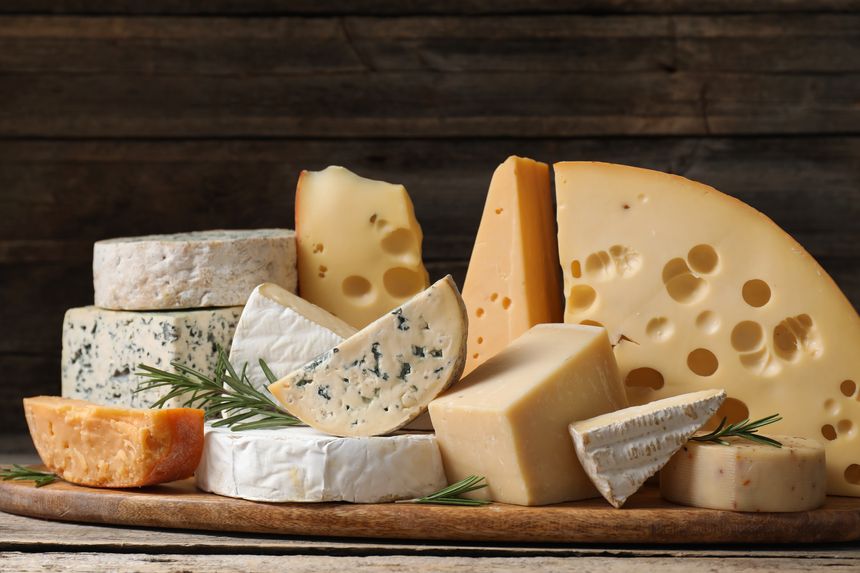
Maybe I’m oversharing here, but count me among the guilty who have spotted a little mold on a block of cheese, cut off the offending chunk and carried on like nothing happened!
Turns out, that isn’t always a bad idea. The important question is what kind of cheese you’re dealing with!
With hard and semi-hard cheeses such as cheddar and Parmesan, their lower moisture content makes it more difficult for unwanted mold to penetrate deeply. Food-safety guidance says you can generally salvage the cheese by cutting away at least one inch around and beneath the moldy area, while keeping your knife out of the mold itself.
Soft cheese is another story. Brie, Camembert, ricotta, cottage cheese and cream cheese contain considerably more moisture, making it easier for mold and potentially harmful bacteria to spread beyond the spot you can see. If unwanted mold shows up on one of those, experts say the safest choice is to toss the whole thing. The same goes for shredded, sliced or crumbled cheese that develops mold.
And yes, there’s an obvious exception: some cheeses are supposed to be moldy. Blue cheeses get their distinctive flavor and veins from molds intentionally introduced during cheesemaking, while Brie and Camembert get their familiar rinds the same way. But even those cheeses can develop unwanted molds, so not every fuzzy spot gets a free pass.
So I feel slightly vindicated. Cutting the mold off that forgotten block of cheddar may be perfectly reasonable. Doing the same thing with the ricotta? Not so much.