

Everyone who claims to be looking for ways to lower the costs of housing and address the housing shortage needs to be looking more seriously into the future of 3D-printed buildings and homes.
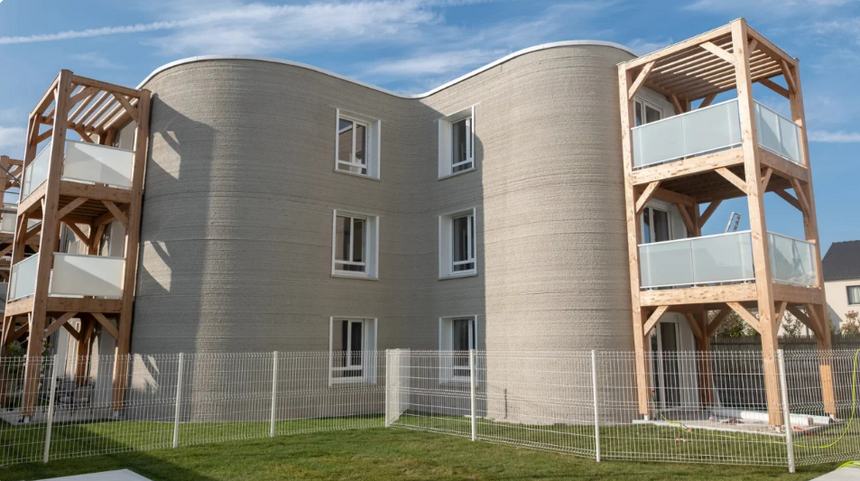
A housing project in northeastern France is offering a glimpse into the future of construction. The ViliaSprint development, now recognized as Europe's largest 3D-printed apartment building, used robotic concrete-printing technology to create a three-story, 12-unit residential building in just 34 days of actual printing time.
The project was completed roughly three months faster than a nearly identical building constructed using traditional methods nearby.
Built with a giant robotic printer that extrudes concrete layer by layer, the project required only three operators and generated significantly less waste than conventional construction. The building also incorporates solar panels, energy-efficient systems, and design features that would have been more expensive to create using traditional techniques. While 3D printing won't solve the housing shortage overnight, projects like this demonstrate how automation, advanced materials, and innovative construction methods could help deliver housing faster, more efficiently, and with a smaller environmental footprint.
/Passle/60211dc9e5416a0c14bc63d4/SearchServiceImages/2026-10-13-15-16-49-499-6ace4b61477453bcaa2e95ec.jpg)
/Passle/60211dc9e5416a0c14bc63d4/SearchServiceImages/2026-10-07-03-07-28-884-6ac5b770e2138e97236d8711.jpg)
/Passle/60211dc9e5416a0c14bc63d4/SearchServiceImages/2026-10-03-02-21-11-638-6ac066977c1a0b1c3a065bb9.jpg)
/Passle/60211dc9e5416a0c14bc63d4/SearchServiceImages/2026-09-27-17-44-10-859-6ab955eaef3ecc8443aa618d.jpg)