
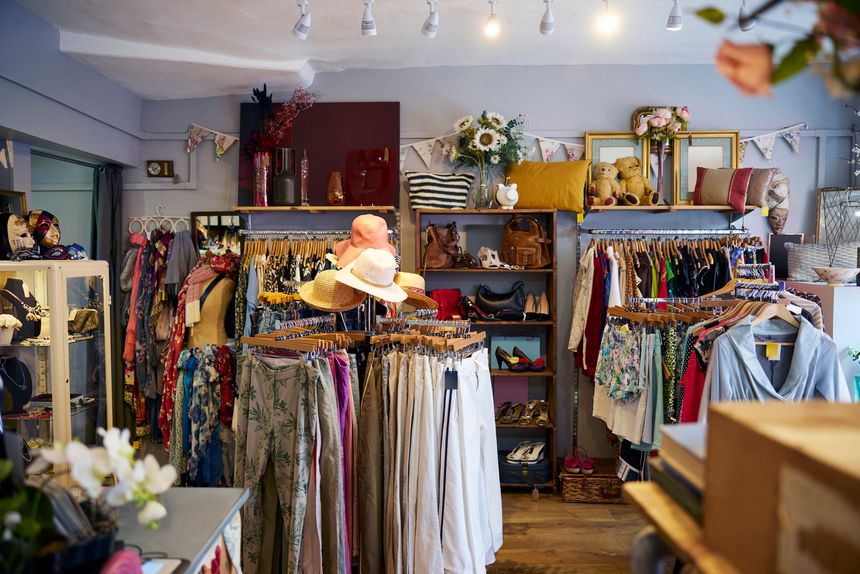
For years, thrift shopping carried an unfair stereotype. It was often viewed as something people did only to save money. Today, that perception is changing.
Recent research suggests that many people who choose secondhand shopping, despite being able to afford new products, are motivated by something much deeper: sustainability, individuality and a desire to consume more intentionally.
I think that's an encouraging shift.
In a world where we're constantly encouraged to buy the latest version of everything, choosing something pre-loved can be a small but meaningful act. It extends the life of products, reduces demand for new resources and reminds us that value isn't always measured by something being brand new.
There's also something refreshing about finding an item with a story. Whether it's a vintage jacket, a piece of furniture or a well-loved book, secondhand purchases often feel more personal than something mass produced straight off the shelf.
Sustainability isn't always about groundbreaking technology or billion-dollar investments. Sometimes it's about changing everyday habits and questioning whether we really need something new in the first place.
Building back ever better doesn't always mean building more. Sometimes it means making better use of what we already have.
/Passle/60211dc9e5416a0c14bc63d4/SearchServiceImages/2026-10-02-13-32-02-404-6abfb2527f63a687f5e4517c.jpg)
/Passle/60211dc9e5416a0c14bc63d4/SearchServiceImages/2026-10-05-13-05-26-086-6ac3a0967533beb6e63d4d89.jpg)
/Passle/60211dc9e5416a0c14bc63d4/SearchServiceImages/2026-09-23-16-39-22-670-6ab400ba0e500d8e6b069e7a.jpg)
/Passle/60211dc9e5416a0c14bc63d4/SearchServiceImages/2026-09-30-10-39-14-152-6abce6d2ce06b7aee061e77e.jpg)