

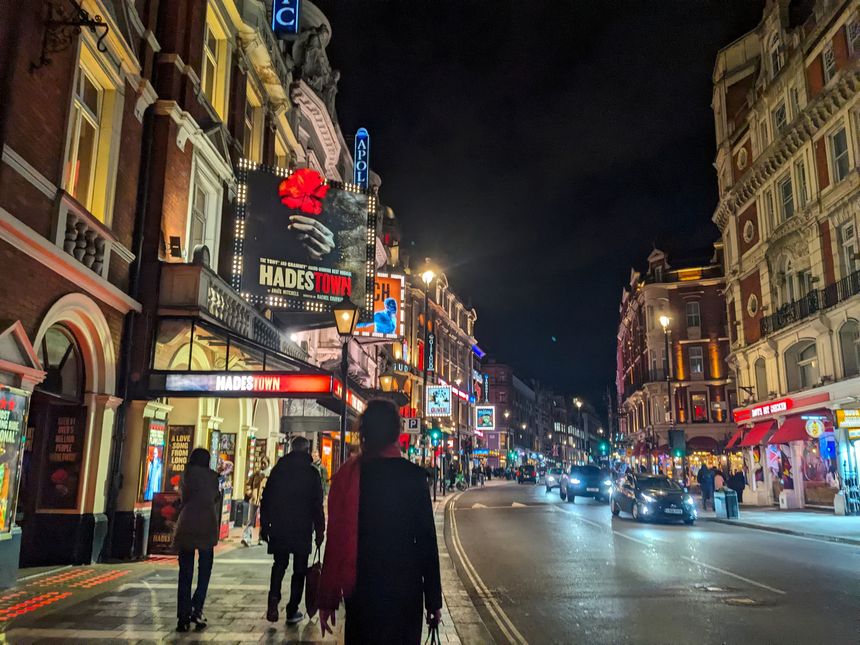
Acclaimed musical RENT will be returning to London’s West End next month to celebrate the thirtieth anniversary of its off-Broadway debut.
The show – loosely inspired by Giacomo Puccini's 1896 opera La Bohème – provides a snapshot into life in New York’s East Village during the 1990s. Its core cast is a group of artists, struggling to survive against themes including the cost of living (financially and emotionally), identity, drug addiction and the devastating HIV/AIDS epidemic.
After three decades, these themes are still present in society and big city life, but the world has changed in many ways: booming populations, advancing medical care and the digital revolution, to name a few.
So, is RENT now just a picture of the past or does it remain, in many ways, a reflection of the human experience?
The price of rent
The cost of living is a constant backdrop to the story and remains hugely topical. Between 1996 and 2026, rent has risen far faster than inflation in both New York and London.
In New York, Manhattan's median rent climbed from $650 a month to an average of $5,453 against 113% US inflation from 1996 to 2026. In London, average rent rose from around £530 a month to roughly £2,290 against 107% UK inflation over the same period. Contributing factors likely include growing city populations, higher barriers to becoming a homeowner and the rise of private rentals.
A key component in today's unprecedented cost of living crisis, it’s a theme that holds up from RENT’s original production.
Attitudes towards LGBTQ+ people
By the time the Netherlands became the first country to legalise same-sex marriage in 2001, RENT had already made its way from off-Broadway to Broadway, toured several times across the US and the UK, and was due for its second stint in London’s West End. It was therefore an undeniably bold move to include the LGBTQ+ relationship between Angel and Collins as one of the show’s central pairings.
Today, more than 30 countries recognise same-sex marriage, and Gallup's most recent World Poll found that in countries where it is legalised, acceptance of gay and lesbian people has risen by at least 30 percentage points among all age groups measured.
In many countries, it’s also no longer unusual to see LGBTQ+ people represented across the arts; in fact, earlier this year Heated Rivalry became global streaming service HBO Max’s most-watched acquired scripted series of all time.
Differences of opinion between countries and societal groups still exist, but evidence points to greater acceptance of LGBTQ+ people more generally.
HIV- and AIDS-related medical advances
RENT premiered at a watershed moment in the HIV/AIDS epidemic. In 1996, the first effective treatments were only just reaching patients and, for most people living with HIV or AIDS, the possibility of a long and healthy life seemed out of reach. This is reflected in RENT’s portrayal of main characters Mimi, Roger, Collins and Angel, who heavily consider their own mortality.
Thirty years on, modern medicine has transformed this reality. UNAIDS data shows that new HIV infections have fallen by roughly 65% since their 1995 peak, from around 3.5 million cases a year to about 1.2 million in 2025.
With effective treatment – now often as simple as one pill a day – those living with HIV can reduce the viral load in their blood to an undetectable level, enabling them to live a healthy life and ensuring that they can’t transmit the infection to partners. Medication such as PrEP can also be taken by HIV-negative people to prevent contracting the infection.
Thanks to these treatments, UNAIDS reported that global AIDS-related deaths in 2025 had reduced by 74% since their 2004 peak, changing the narrative for millions living with HIV since the stories from RENT were first told.
Perceptions of addiction
For many, RENT provided a revolutionary depiction of addiction, leading with sympathy and compassion, rather than judgement. Today, we're seeing these attitudes represented more widely across society, with Gallup data telling us that 77% of Americans now recognise addiction as a health condition, and 89% saying they'd help a close friend or family member struggling with addiction.
And while a degree of stigma remains, the support systems available to people struggling with addiction tell a story more aligned with greater societal support. As of 2024, there were nearly 18,000 dedicated substance use treatment facilities across the US – up from around 10,600 in 1996.
Living in the moment
“No day but today”, one of RENT’s most iconic lines, is a call to live fully in the present. Since the mid-1990s, however, we’ve seen the rise of two of the greatest technological disruptors of the last 30 years: the internet and smartphones.
As of 1998, just 9% of UK households had internet access and the first of the modern generation of smartphones was nearly 10 years from release. Now, UK adults spend an average of 4 hours and 43 minutes online every day, and 40% say their screen time is too high most days.
There is rising concern around issues like doomscrolling and the way online dependency takes away from real life experiences and forming meaningful connections, particularly among the younger generation who have never known life without modern technology.
While the characters in RENT had to choose distractions that kept them engaged with the world, many people today can simply reach into their pocket and exist in isolation for extended periods.
A fragmented mirror
So, is RENT just a picture of the past? In some ways, yes. The show is unmistakably a product of its time, and some elements have aged and drawn fresh criticism as the world has moved forward.
But it's not purely a time capsule. Some of its themes, like the cost of living crisis, feel even more pressing today. Others, like the fight against HIV/AIDS, remind us of the meaningful progress made. And some, like the call to live for the moment, are timeless – even if the barriers for doing so have changed.
Ultimately, RENT still provides a reflection. The mirror is just fragmented. There are clear likenesses, altered truths and, in places, views that have become unrecognisable.
/Passle/60211dc9e5416a0c14bc63d4/SearchServiceImages/2026-09-10-00-52-25-316-6aa1ff49ff5bd9fb0fed759a.jpg)
/Passle/60211dc9e5416a0c14bc63d4/SearchServiceImages/2026-09-09-15-01-38-177-6aa174d2313dbadbe82c2a01.jpg)
/Passle/60211dc9e5416a0c14bc63d4/SearchServiceImages/2026-09-08-15-59-47-905-6aa030f3d27ce9f0cbae7a79.jpg)
/Passle/60211dc9e5416a0c14bc63d4/SearchServiceImages/2026-09-04-10-40-38-568-6a9aa0260d5bc279697263a2.jpg)