

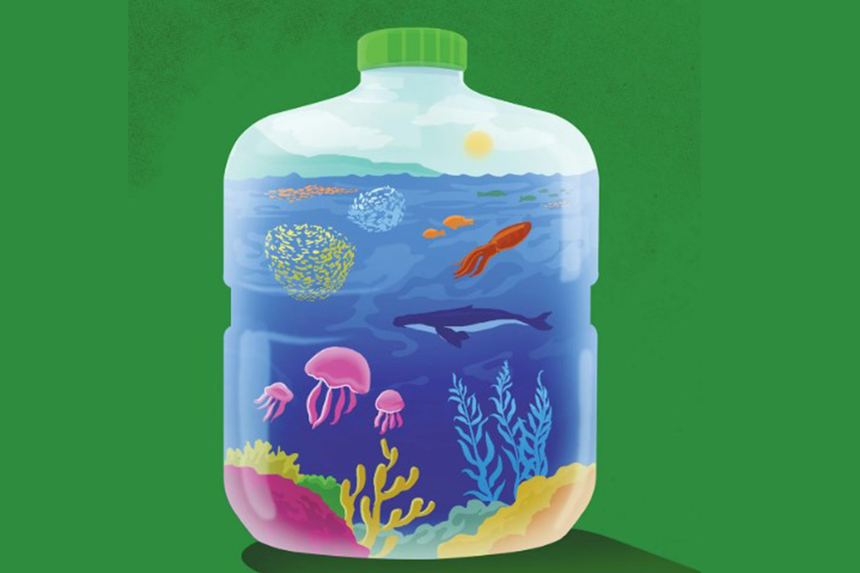
There was a time when synthetic polymers were hailed as a sustainability breakthrough, promising alternatives to scarce natural materials. Plastics offered durability, versatility, and cost efficiency. As Scientific American notes, they were supposed to free us from the limitations of our natural resources. Yet today, those same polymers have become a global environmental crisis.
The promise of plastic lay in its durability, but that strength is also what turned it into a problem. Production surged after World War II as plastics replaced more expensive glass, paper, and metal. That surge fuelled widespread disposal and environmental persistence. Despite the development of recycling programs in the 1970s and 80s, the scale of plastic use quickly outpaced infrastructure, and recycling alone proved insufficient. We developed effective plastics stabilizers such antioxidants and UV absorbers than extent the plastics life for ever.
Microplastics are now found across ecosystems and even within our bodies, posing risks that scientists are still working to fully understand. The very invention meant to conserve resources now jeopardizes planetary health. This paradox underscores an important truth. Innovation often solves the challenges of one generation but can create new ones for the next. When that happens, our role is to adapt, rethink, and reimagine solutions. The plastic crisis is a powerful example, but it also serves as a reminder of our ability to rise to the occasion.
Just as synthetic polymers once seemed to be the answer, today’s breakthroughs hold enormous promise. New advance upcycling technologies that transform plastic waste into useful products, bio-inspired designs Circular economy design, waste management infrastructure, government policy and regulations and consumer behaviour and awareness. This will show that adaptation through innovation is not optional—it is necessary. The challenge now is to design with the full lifecycle in mind, invest in circular systems, and move quickly from ideas to action.
Innovation was once our escape from material scarcity, and now adaptability must guide us through the dilemmas of our own making. This is our moment to pivot again. As challenges evolve, so must we, and the way we respond today will determine the sustainability of tomorrow.
/Passle/60211dc9e5416a0c14bc63d4/MediaLibrary/Images/2024-07-25-19-34-58-437-66a2a8e2012a075bf2d3886e.jpg)
/Passle/60211dc9e5416a0c14bc63d4/SearchServiceImages/2026-08-28-21-08-00-332-6a91f8b0de355275bbc2047e.jpg)
/Passle/60211dc9e5416a0c14bc63d4/SearchServiceImages/2026-09-01-19-40-59-331-6a972a4bf9386af8ea707113.jpg)
/Passle/60211dc9e5416a0c14bc63d4/SearchServiceImages/2026-09-03-11-57-48-238-6a9960bc7466c353608a92a5.jpg)