

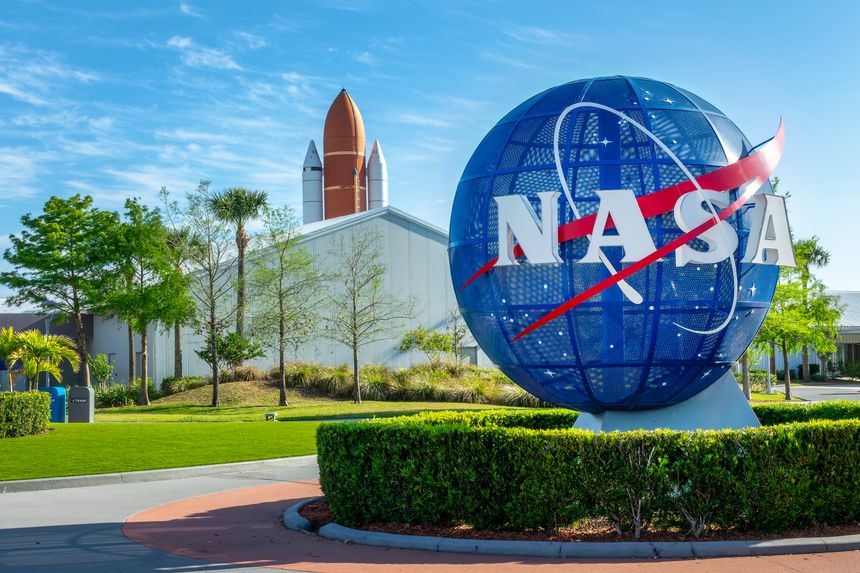
Forty nine years ago NASA rolled out its first space shuttle, Enterprise, in Palmdale, California, marking a milestone in reusable spaceflight. At that time Enterprise was not designed to go into orbit but to test the approach and landing characteristics that would prove essential for future missions. Its public debut on September 17, 1976 drew crowds and curiosity showcasing not only a spacecraft but a bold idea that spacecraft could be flown like planes on portions of their journey.
I find this history so exciting. Thinking about the ingenuity and determination it took to bring the shuttle program to life is inspiring, and it is amazing to reflect on how far NASA has come since that first unveiling. The courage to imagine something that had never been done before and then methodically prove it out is just so cool.
Since then NASA has traveled a remarkable journey moving from test flights and prototypes to launching humans into orbit, returning samples from asteroids, sending rovers to Mars, and preparing for Artemis missions to the Moon. Along the way innovations in materials, structures, propulsion, and operations have advanced significantly while public engagement and international collaboration have grown. The Enterprise’s debut reminds us that vision and rigorous testing are the foundation on which ambitious space exploration is built.
/Passle/60211dc9e5416a0c14bc63d4/MediaLibrary/Images/2024-07-25-19-34-58-437-66a2a8e2012a075bf2d3886e.jpg)
/Passle/60211dc9e5416a0c14bc63d4/SearchServiceImages/2026-08-28-21-08-00-332-6a91f8b0de355275bbc2047e.jpg)
/Passle/60211dc9e5416a0c14bc63d4/SearchServiceImages/2026-09-01-19-40-59-331-6a972a4bf9386af8ea707113.jpg)
/Passle/60211dc9e5416a0c14bc63d4/SearchServiceImages/2026-09-03-11-57-48-238-6a9960bc7466c353608a92a5.jpg)