
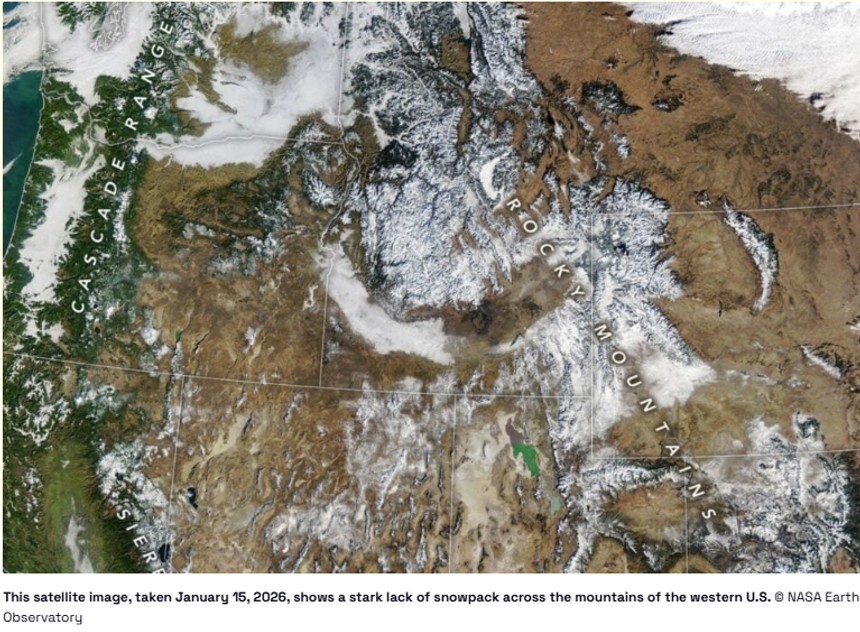
This has generally been a mild winter on the west coast. Temperatures have often been above normal and the snow and rain of the season hasn't materialized (for the most part, at least).
And that's great for the comfort of the residents. But maybe not so good for the future!
The region is facing one of its worst snow droughts in decades, and while the snowsport industry is already feeling the effects, the impacts this summer could be far worse. These conditions could therefore set the stage for a summer of severe water scarcity, potentially exacerbating an already dire situation in the Colorado River Basin and heightening wildfire risk across the region.
The West’s disappearing snowpack
Mountain snowpack is the American West’s primary water resource. While rain tends to run off before it can recharge reservoirs and aquifers, springtime snowmelt produces a more metered, sustained water supply. In fact, up to 75% of the region’s freshwater comes from snowmelt.
As global temperatures rise, this critical resource is dwindling. Research has shown a direct link between human-driven climate change and snow loss across the Northern Hemisphere. In the western U.S., snowpack declined nearly 20% on average between 1955 and 2020, according to an analysis by the Environmental Protection Agency.
What snowpack remains is consistently melting much quicker and earlier than it used to, which is a problem in itself. This leaves less water available during the driest weeks of summer, when the risk of drought and wildfire is highest.
How snow drought increases wildfire risk
Snowpack, drought, and wildfire are all interconnected. Reduced snowpack and rapid, early melt-outs increase the risk of drought, which in turn increases the risk of wildfire as the landscape dries out.
This winter is a textbook example of how climate change is reshaping winter in the West. The next few months will be critical as emergency managers size up what could be a particularly dangerous dry season. As the world warms, snow droughts like this one are becoming less of an anomaly and more so a defining feature of the West’s rapidly changing climate.
/Passle/60211dc9e5416a0c14bc63d4/SearchServiceImages/2026-09-14-13-51-59-114-6aa7fbff942e1ead4d7a6bb3.jpg)
/Passle/60211dc9e5416a0c14bc63d4/SearchServiceImages/2026-09-14-11-29-34-455-6aa7da9e162ac4d6485e94ed.jpg)
/Passle/60211dc9e5416a0c14bc63d4/MediaLibrary/Images/2026-09-17-13-58-04-341-6aabf1ecd83deebed679a4a3.png)
/Passle/60211dc9e5416a0c14bc63d4/SearchServiceImages/2026-09-15-17-58-27-875-6aa987430810fd5205abc3e8.jpg)