


Large-scale batteries are transforming the way we store and distribute energy, offering a sustainable solution to reduce our dependence on fossil fuels. These batteries, similar to those in phones and electric cars, are now being scaled up to help stabilize electrical grids, especially in regions like California and Texas that have become all-to-familiar with the phrase “rolling blackouts”.
The batteries store excess energy during periods of low demand and release it when the grid is under strain, such as during heatwaves or other extreme events.
The cost of large-scale energy storage systems has dropped significantly—by 73% since 2017—making them increasingly affordable and effective for grid operators. Unlike traditional power plants, battery farms can be quickly deployed, take up less space, and don’t emit harmful pollutants, making them a cleaner alternative.
New battery technologies are also pushing the limits of storage duration. For example, zinc-based and iron-air batteries are being developed to store energy for up to 100 hours, addressing the challenge of prolonged power outages. As these advancements continue, large-scale batteries will play an even bigger role in reducing fossil fuel use and supporting the growth of renewable energy sources.
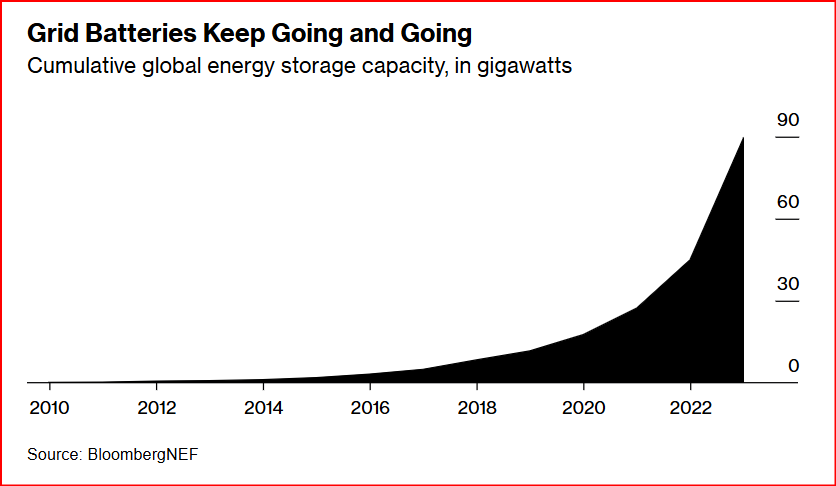
As the chart below shows, battery deployment has seen incredible growth the last ten years. it might be another ten years before it slows down.

/Passle/60211dc9e5416a0c14bc63d4/SearchServiceImages/2026-10-09-14-47-29-978-6ac8fe81bf2cf47546e7c7c8.jpg)
/Passle/60211dc9e5416a0c14bc63d4/SearchServiceImages/2026-10-16-11-16-08-226-6ad20778f0722e0f6fffd010.jpg)
/Passle/60211dc9e5416a0c14bc63d4/SearchServiceImages/2026-10-22-14-57-06-228-6ada2442594ea8e6e3b00785.jpg)
/Passle/60211dc9e5416a0c14bc63d4/SearchServiceImages/2026-10-15-08-01-34-892-6ad0885ed13e4bbdf6a6a870.jpg)




