

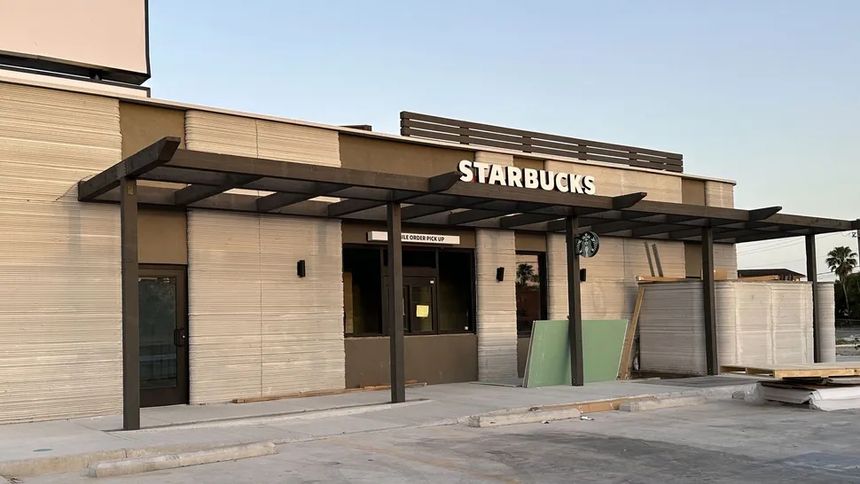
Starbucks has unveiled its first 3D-printed coffee shop in Texas, but the bigger story is about where this kind of innovation could take us.
Rather than traditional construction, which involves multiple skills and trades not to mention weeks (or months) of labor, this building was produced with a robotic arm and concrete-like material using a giant 3D printer—delivering a ready-to-go café in just a few days.
The implications go far beyond coffee. This technology promises faster, more efficient, and more sustainable building processes. Entire retail environments, disaster relief shelters, or even urban housing could be printed on demand—minimizing waste, reducing costs, and dramatically speeding up timelines.
For the retail sector, this could mean customized, pop-up storefronts that adapt to location needs or seasonal demand. For cities, it opens the door to creative, eco-conscious architecture that can be manufactured locally with fewer emissions and greater affordability.
Today it’s a Starbucks. Tomorrow it could be your neighborhood grocery store, clinic, or community center—printed, placed, and open for business in record time.
/Passle/60211dc9e5416a0c14bc63d4/SearchServiceImages/2026-10-16-11-16-08-226-6ad20778f0722e0f6fffd010.jpg)
/Passle/60211dc9e5416a0c14bc63d4/SearchServiceImages/2026-10-22-14-57-06-228-6ada2442594ea8e6e3b00785.jpg)
/Passle/60211dc9e5416a0c14bc63d4/SearchServiceImages/2026-10-15-08-01-34-892-6ad0885ed13e4bbdf6a6a870.jpg)
/Passle/60211dc9e5416a0c14bc63d4/SearchServiceImages/2026-10-06-17-19-56-342-6ac52dbc4e3377a132b46e72.jpg)