


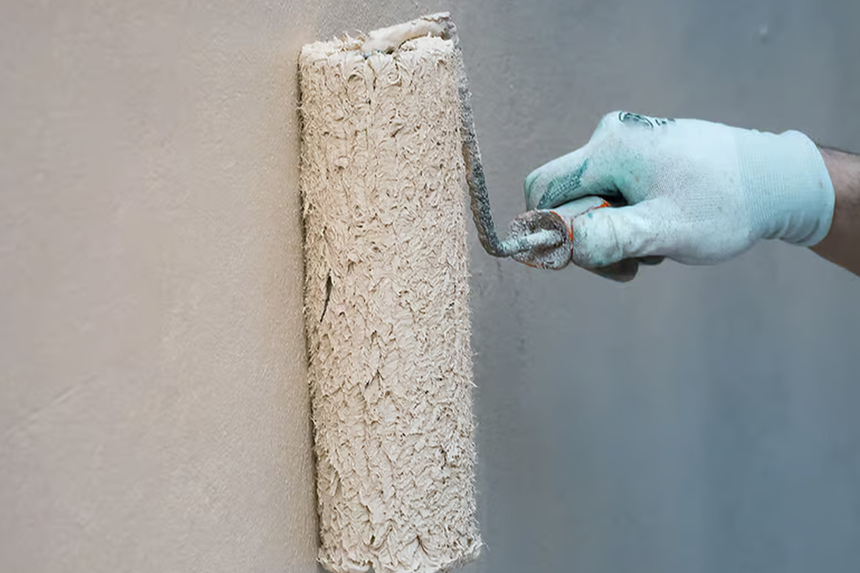
Researchers in Singapore have introduced a breakthrough “sweating” paint designed specifically for humid climates. This cement-based coating not only reflects an impressive 88–92% of sunlight but also holds water in its porous structure and slowly evaporates it—much like human perspiration—achieving passive evaporative cooling. In tests on three homes, this paint reduced air-conditioning electricity consumption by 30–40%, even after enduring two years of sun and rain while maintaining its bright white appearance.
This technology is transformative because it merges three cooling strategies—solar reflection, radiative sky cooling, and active evaporation—into a single, low-cost paint. Unlike standard reflective paints, which lose effectiveness in humid conditions, this formula remains functional and efficient in tropical environments where water vapor often traps heat. By cutting energy use for cooling and reducing the urban heat island effect, it offers a practical and scalable solution for both new builds and retrofits.
This “sweating” paint is a truly innovative leap forward—offering a smart, sustainable, and energy-free approach to climate control. As buildings account for roughly 60% of energy used for cooling, adopting such passive technologies can redefine how we design and maintain comfortable environments while lowering carbon footprints. It's a vivid example of how biomimicry combined with material science can deliver real-world impact.
/Passle/60211dc9e5416a0c14bc63d4/SearchServiceImages/2026-10-16-11-16-08-226-6ad20778f0722e0f6fffd010.jpg)
/Passle/60211dc9e5416a0c14bc63d4/SearchServiceImages/2026-10-22-14-57-06-228-6ada2442594ea8e6e3b00785.jpg)
/Passle/60211dc9e5416a0c14bc63d4/SearchServiceImages/2026-10-15-08-01-34-892-6ad0885ed13e4bbdf6a6a870.jpg)
/Passle/60211dc9e5416a0c14bc63d4/SearchServiceImages/2026-10-06-17-19-56-342-6ac52dbc4e3377a132b46e72.jpg)




