

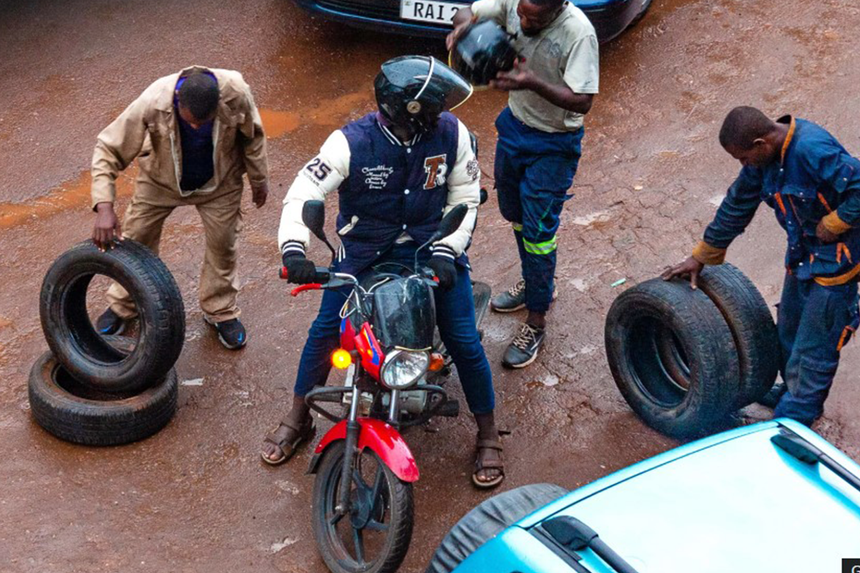
Rwanda is emerging as a powerhouse in Africa’s e‑mobility revolution, leveraging electric motorcycles to drive sustainable transport even amid grid challenges. Backed by startups and government support, the country is aggressively transitioning its fleet of over 100,000 moto‑taxis to electric models, many powered and charged off‑grid via solar micro‑grids and battery‑swap stations So far, around 4,800 e‑bikes are already in use, delivering major benefits: lower emissions, reduced fuel costs, and improved incomes for drivers who now spend up to 40% less on operating costs.
What makes Rwanda’s model particularly innovative is its holistic infrastructure approach. Rather than depending solely on unreliable national grids, the country is combining solar charging stations, battery‑swap networks, retrofit services, and favorable financing plans to ensure accessibility and scalability for real-world conditions—rugged bikes, affordable leasing, and seamless battery support—that empowers urban moto‑taxi drivers, enhances urban air quality, and sets a blueprint for sustainable mobility across Africa.
For businesses and cities across the continent, Rwanda offers a compelling case study. Its dual focus on renewable energy infrastructure and supportive policy frameworks highlights how e‑mobility can thrive in emerging economies. This electric motorcycle revolution isn’t just an environmental win—it’s an economic and social one too, amplifying income for drivers, cutting household spending on fuel, and improving health outcomes through cleaner air. It’s proof that innovative, context‑aware solutions can help drive both sustainability and prosperity.
/Passle/60211dc9e5416a0c14bc63d4/MediaLibrary/Images/2024-07-25-19-34-58-437-66a2a8e2012a075bf2d3886e.jpg)
/Passle/60211dc9e5416a0c14bc63d4/SearchServiceImages/2026-08-28-21-08-00-332-6a91f8b0de355275bbc2047e.jpg)
/Passle/60211dc9e5416a0c14bc63d4/SearchServiceImages/2026-09-01-19-40-59-331-6a972a4bf9386af8ea707113.jpg)
/Passle/60211dc9e5416a0c14bc63d4/SearchServiceImages/2026-09-03-11-57-48-238-6a9960bc7466c353608a92a5.jpg)