

I once checked into a hotel in Abu Dhabi with my white cane. At the front desk, the staff didn’t understand what it was or why I was using it. To them, it wasn’t a recognised symbol of blindness. It was just… odd.
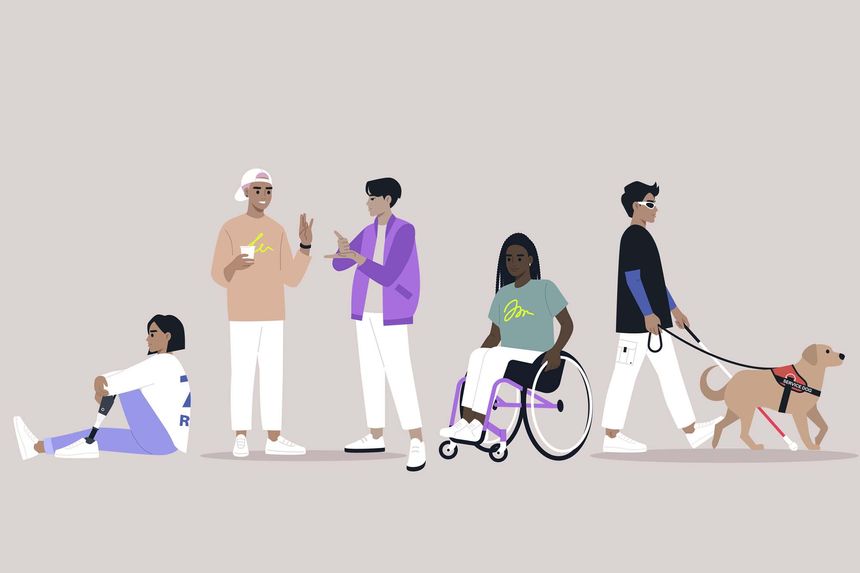
That moment stuck with me. Because when you grow up seeing disability represented around you in TV, adverts, artwork, social media, you understand what a cane means, or why someone might use a wheelchair, or how a hearing aid works. Representation normalises difference. Without it, people get left guessing.
Why Representation Shapes Culture
When disability is absent from media and business, the world becomes harder to navigate. Not just for disabled people, but for everyone else who doesn’t know how to respond.
Representation isn’t just about visibility, it’s about belonging. Seeing disability authentically shown in campaigns, in advertising, in everyday imagery tells people: you’re included here. It also educates wider society, breaking down awkwardness and misunderstanding.
That’s why initiatives like the Authentic Representation Tool (ART) from the Valuable 500 matter so much.
What the ART Tool Does
The ART tool is a global directory of disabled creators: photographers, filmmakers, illustrators, designers. Instead of falling back on bland stock images of “diverse” models, businesses can use ART to find real talent with lived experience of disability.
It means:
- Campaigns built on genuine stories, not clichés.
- Visuals that actually reflect the communities they claim to represent.
- Disabled artists getting paid, recognised, and platformed in mainstream business.
This isn’t an art gallery. It’s a working tool companies can plug straight into their creative process.
Why Businesses Should Care
Representation has a direct impact on trust. Employees who identify as disabled notice when their reality is erased or flattened into stereotypes. Customers notice when brands use stock tokenism instead of authentic voices.
By working with disabled creators, businesses show they’re serious about inclusion. They shift from talking about disability to co-creating with disabled people. That’s a culture change, not a PR exercise.
Moving Beyond Tokenism
Here’s the critical point: authentic representation isn’t just about featuring a disabled person in a photo. It’s about involving disabled people in the storytelling from the ground up. That’s where ART is powerful, it makes those connections easy, scalable, and global.
And when the art itself is accessible with captions, descriptions, and multi-sensory formats, the inclusion is doubled. The work doesn’t just show disability, it invites disabled people to be part of the audience too.
Closing Thought
I’ll never forget that puzzled look in Abu Dhabi when staff didn’t know what my cane was. That moment of misunderstanding could have been avoided if disability was more present in the images, campaigns, and media those staff had grown up seeing.
That’s why tools like ART are important. They give businesses a practical way to stop relying on stereotypes and start representing disability as part of everyday life.
Because representation isn’t decoration. It’s education. It’s belonging. And it changes how we all see the world.
/Passle/60211dc9e5416a0c14bc63d4/MediaLibrary/Images/2024-07-25-19-34-58-437-66a2a8e2012a075bf2d3886e.jpg)
/Passle/60211dc9e5416a0c14bc63d4/SearchServiceImages/2026-08-28-21-08-00-332-6a91f8b0de355275bbc2047e.jpg)
/Passle/60211dc9e5416a0c14bc63d4/SearchServiceImages/2026-09-01-19-40-59-331-6a972a4bf9386af8ea707113.jpg)
/Passle/60211dc9e5416a0c14bc63d4/SearchServiceImages/2026-09-03-11-57-48-238-6a9960bc7466c353608a92a5.jpg)