


I recently came across a powerful story from the Associated Press about Indigenous youth in Colombia who are learning how to protect the land their communities fought to reclaim. It is one of those stories that stays with you because it shows both the fragility of our environment and the resilience of the people determined to protect it.
In Colombia’s Cauca region, members of the Nasa Indigenous community reclaimed hundreds of hectares of land in 2019 that had been used for industrial sugarcane farming. Years of monoculture had degraded the soil and polluted local water sources. Once the land was taken back, families began restoring it by planting crops like corn, beans, cassava, and plantains while allowing forests to regenerate.
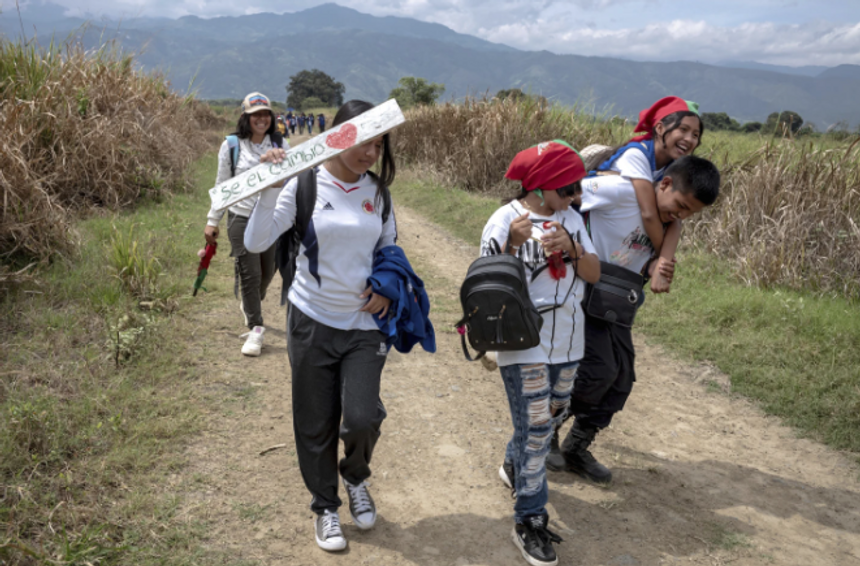
What struck me most is how the community is now teaching its children to become stewards of this land. Through cultural education programs and youth gatherings, they learn about environmental care, their history, and their responsibility to protect the territory their families fought to recover.
This education is about far more than farming. The region has been shaped by decades of armed conflict, and children are often targeted for recruitment by guerrilla groups and criminal networks. Since 2016, Indigenous organizations in the region say hundreds of young people have been pulled into these armed groups.
By creating spaces where youth learn about culture, land, and community leadership, the Nasa people are offering an alternative path. Instead of being drawn into violence, young people are being taught to defend their land through knowledge, stewardship, and pride in their heritage.
What makes this story so hopeful is that the work is happening at the grassroots level. Children are planting signs that say “We were born to protect the environment” while helping clean and care for the land around them. It may seem like a small act, but it represents something much bigger. It is a statement that the future of this land belongs to those who will care for it.
Stories like this remind me that sustainability is not always driven by technology or policy. Sometimes it begins with community, culture, and the simple act of teaching the next generation that the land is worth protecting.
And when young people grow up seeing themselves as guardians of the earth, the future suddenly feels a little more hopeful.
/Passle/60211dc9e5416a0c14bc63d4/MediaLibrary/Images/2026-10-08-14-59-39-789-6ac7afdb1204b135b13c425a.png)
/Passle/60211dc9e5416a0c14bc63d4/SearchServiceImages/2026-10-03-17-09-33-012-6ac136cd8774e417e831aed3.jpg)
/Passle/60211dc9e5416a0c14bc63d4/SearchServiceImages/2026-10-13-15-16-49-499-6ace4b61477453bcaa2e95ec.jpg)
/Passle/60211dc9e5416a0c14bc63d4/SearchServiceImages/2026-10-07-03-07-28-884-6ac5b770e2138e97236d8711.jpg)