

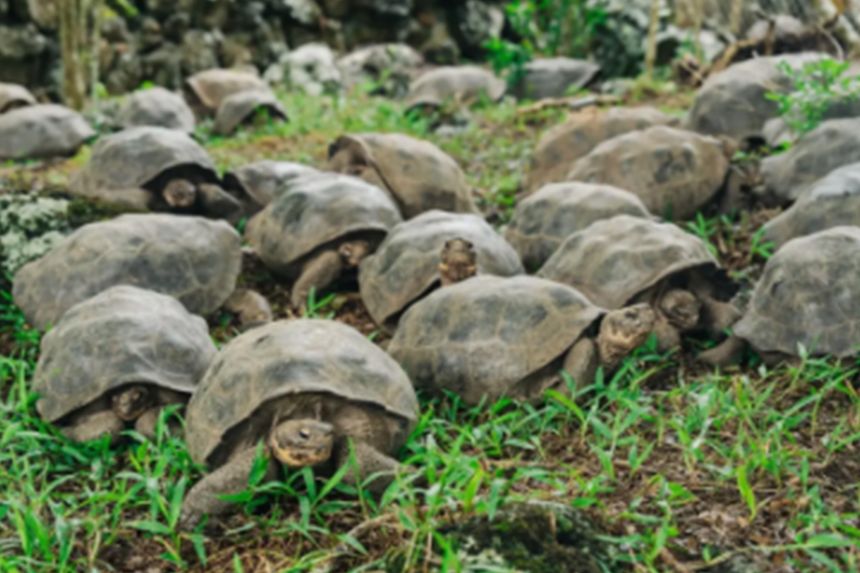
Some environmental stories remind us that restoration is possible, even after centuries of damage. The recent return of giant tortoises to Floreana Island in the Galápagos is one of those stories.
For nearly two hundred years, these iconic animals were missing from the island. Early human activity and introduced species wiped out the original tortoise population that once played a vital role in shaping the island’s ecosystem. Without them, the natural balance of plant life and seed dispersal slowly changed.
Now scientists are working to bring that balance back.
Through careful breeding programs, conservationists were able to identify and raise tortoises that are genetically similar to the original Floreana species. After years of preparation, these tortoises are finally being reintroduced to the island they once helped shape.
This is about more than bringing back a single species. Giant tortoises are considered a keystone species. Their movement across the landscape spreads seeds, shapes vegetation, and creates pathways that influence how plants grow across the island. In many ways, they function like ecosystem engineers.
By returning them, scientists hope to restore ecological processes that disappeared generations ago.
What makes this story powerful is the patience behind it. Conservation work often takes decades before results become visible. Breeding programs, habitat restoration, and invasive species control all require sustained effort. The return of these tortoises shows what can happen when long term commitment meets scientific innovation.
Nature may not recover overnight. But when we give ecosystems the time, protection, and attention they need, recovery is possible.
Two hundred years later, the giant tortoises are coming home. And with them, a piece of the Galápagos ecosystem is coming back to life.
/Passle/60211dc9e5416a0c14bc63d4/SearchServiceImages/2026-10-22-14-57-06-228-6ada2442594ea8e6e3b00785.jpg)
/Passle/60211dc9e5416a0c14bc63d4/SearchServiceImages/2026-10-15-08-01-34-892-6ad0885ed13e4bbdf6a6a870.jpg)
/Passle/60211dc9e5416a0c14bc63d4/SearchServiceImages/2026-10-06-17-19-56-342-6ac52dbc4e3377a132b46e72.jpg)
/Passle/60211dc9e5416a0c14bc63d4/SearchServiceImages/2026-10-05-15-09-50-332-6ac3bdbeb62340ff37b1cbcb.jpg)