

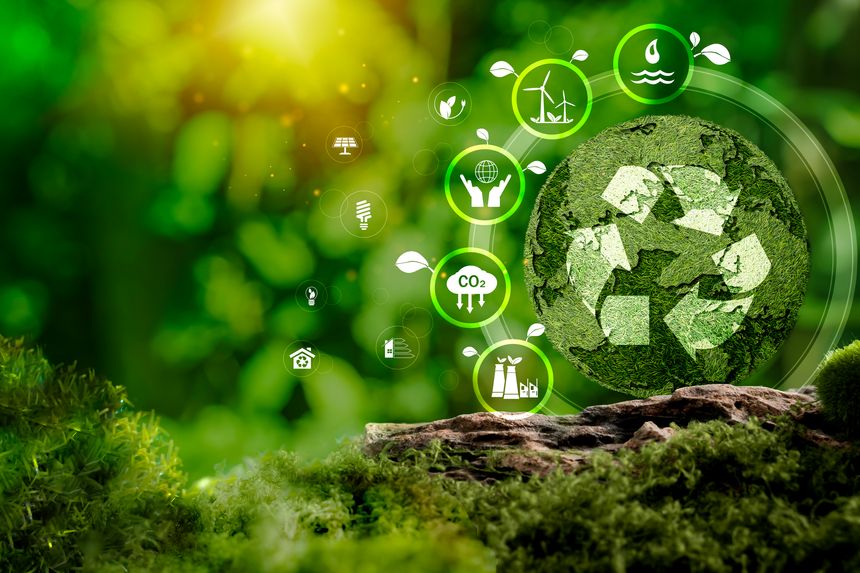
In today’s rapidly evolving business landscape, sustainability is no longer a “nice to have”—it is a strategic imperative. As global consumption continues to outpace the Earth’s capacity, organizations are being challenged to rethink traditional linear models of “take, make, waste” and transition toward more resilient, future-ready approaches.
This shift is driving growing interest in the circular economy—a model that not only addresses environmental pressures but also unlocks significant economic value. By designing out waste, extending the life of materials, and regenerating natural systems, businesses have an opportunity to innovate, reduce costs, and build long-term competitive advantage.
This article explores what the circular economy means in practice and how forward-thinking organizations can position themselves to capitalize on one of the most important business transformations of our time.
/Passle/60211dc9e5416a0c14bc63d4/SearchServiceImages/2026-09-23-16-39-22-670-6ab400ba0e500d8e6b069e7a.jpg)
/Passle/60211dc9e5416a0c14bc63d4/SearchServiceImages/2026-09-30-10-39-14-152-6abce6d2ce06b7aee061e77e.jpg)
/Passle/60211dc9e5416a0c14bc63d4/SearchServiceImages/2026-10-05-07-46-34-555-6ac355da5a3b6bd1825bc179.jpg)
/Passle/60211dc9e5416a0c14bc63d4/SearchServiceImages/2026-10-06-16-03-57-961-6ac51beda2651f39e10fb916.jpg)