

I was standing in the kitchen, trying to make the family dinner.
That sounds straightforward. For most people, it is. But when you have significant sight loss, cooking from scratch involves a quiet but persistent set of obstacles — best before dates you cannot read, cooking instructions in tiny print on the back of packaging, temperatures and timings that matter and that you simply cannot make out.
My options, as I knew them: call out to someone in the house and ask for help. Interrupt whatever they were doing. Feel, briefly but unmistakably, like a burden.
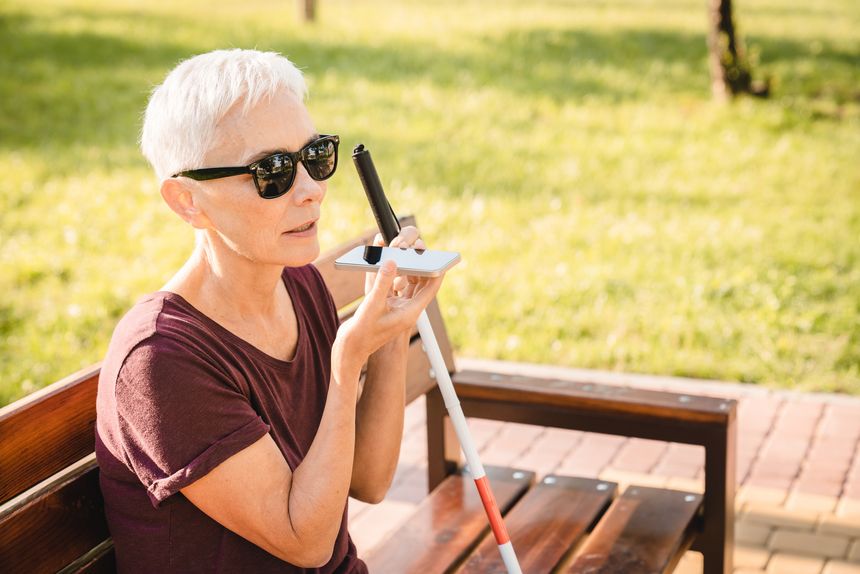
Instead, I put on my Meta Ray-Bans, asked Meta AI for assistance, and was connected — through Be My Eyes — with a volunteer. Within moments, a real person on the other end of a live video call was reading me the best before date and the cooking instructions. Clearly, accurately, without fuss.
I made the dinner. Nobody else needed to be involved. That quiet, unremarkable independence — that is what accessibility technology actually delivers, when it works.
One Million Users. Ten Million Volunteers.
Last week, at the 41st CSUN Assistive Technology Conference in San Francisco, Be My Eyes announced that it has now reached more than one million blind and low-vision users, supported by a global network of over ten million volunteers. The platform spans more than 150 countries and operates in more than 180 languages.
It is a genuinely remarkable milestone for a company founded on a disarmingly simple idea: that sighted people, given the chance, will help. That premise has held. Ten million times over.
"This community shows the incredible willingness of people around the world to help one another. Every day, millions of small acts of kindness happen through the app, and together they make the world more accessible."
— Hans Jørgen Wiberg, Founder, Be My Eyes
He is right. But I want to be specific about what those small acts of kindness look like from the other side of the screen. They look like making dinner. They look like reading a letter. They look like navigating an unfamiliar space without having to depend on the nearest person who happens to be available.
They look like not being a burden, when for a long time you had quietly started to feel like one.
The Gap That Remains
The milestone deserves celebrating. The context around it deserves equal attention.
An estimated 340 million people worldwide live with blindness or low vision. Be My Eyes has reached one million of them. That is a one-in-three-hundred reach rate. The tools exist. The volunteers exist. The willingness is clearly there. But access — geographic, linguistic, technological, economic — remains a profound barrier for the overwhelming majority of people who could benefit.
This is precisely why the announcement of the Be My Eyes Foundation matters. Its stated purpose is to ensure that blind and low-vision people will always have free access to the technologies and services that enable them to live, work, and participate in society. The ambition is significant: to reach hundreds of millions of people, not just millions.
"Reaching this milestone is a moment to celebrate — but it's also a reminder of how much work remains."
— Mike Buckley, CEO, Be My Eyes
That is the right framing. Celebrate the progress. Do not mistake it for arrival.
What the Meta Ray-Bans Change
What I experienced in my kitchen represents something worth naming clearly: the convergence of wearable technology and human volunteer networks.
The Meta Ray-Ban glasses have Be My Eyes integrated directly. That means the barrier to accessing a volunteer — finding your phone, opening an app, navigating a UI you cannot always see clearly — is removed. I asked for help by speaking. I received it within seconds. The glasses stayed on my face. The dinner got made.
This is what genuine accessibility design looks like. Not a workaround. Not a bolt-on. A seamless layer of support that sits inside the flow of ordinary life, activates when you need it, and disappears when you do not.
Wearable AI and volunteer networks were, until recently, separate things. They are beginning to converge. The implications for blind and low-vision people are significant — and this is only the beginning of what that combination can do.
Takeaway
Be My Eyes reaching one million users is not a ceiling. It is a baseline. The platform has demonstrated that the model works — human kindness, scaled and structured, changes lives. The Foundation signals an intent to take that proof of concept and push it toward the hundreds of millions of people who still lack access.
If you are not yet a Be My Eyes volunteer, it takes minutes to sign up and costs you nothing. If you work in accessibility, product design, or technology strategy, the Be My Eyes integration model is worth studying — this is what it looks like when assistive technology stops being a category of its own and starts becoming infrastructure.
And if you are a blind or low-vision person who has not yet tried the platform: it is free, it works, and it might just let you make the dinner yourself.
That matters more than it sounds.
Source: Be My Eyes milestone announcement, announced at CSUN 2026.
/Passle/60211dc9e5416a0c14bc63d4/SearchServiceImages/2026-09-10-08-39-43-693-6aa26ccfff5bd9fb0fee8b1c.jpg)
/Passle/60211dc9e5416a0c14bc63d4/SearchServiceImages/2026-09-08-12-37-06-384-6aa00172d27ce9f0cbadefc5.jpg)
/Passle/60211dc9e5416a0c14bc63d4/SearchServiceImages/2026-09-10-00-52-25-316-6aa1ff49ff5bd9fb0fed759a.jpg)
/Passle/60211dc9e5416a0c14bc63d4/SearchServiceImages/2026-09-09-15-01-38-177-6aa174d2313dbadbe82c2a01.jpg)