

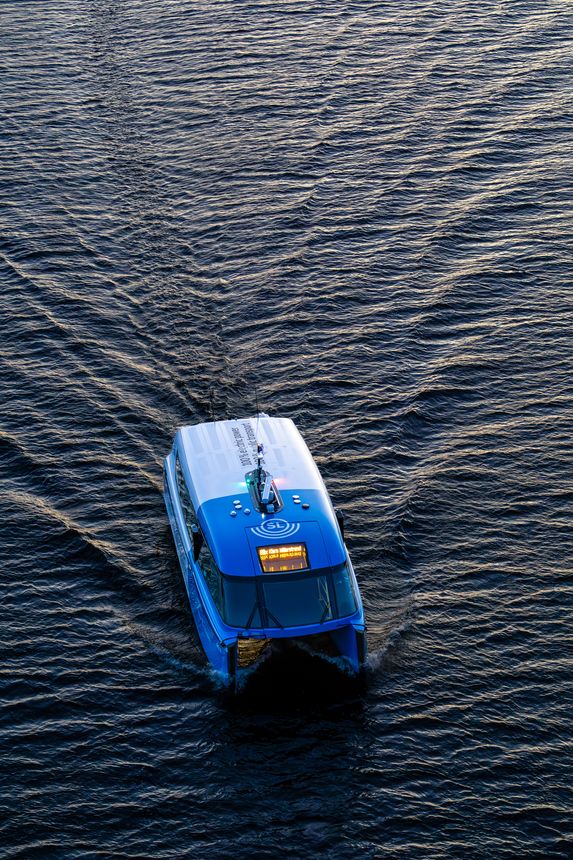
This feels like a glimpse into what the future of everyday transport could actually look like. The idea of “flying ferries” might sound futuristic, but what’s striking is how grounded the solution really is. These electric hydrofoil vessels are designed to solve a very real challenge along Norway’s coastline, where water transport is essential for daily life. According to Good News Network, operator Boreal has ordered 20 of these boats, which will quietly glide above the water while carrying commuters and tourists.
What makes this innovation so compelling is the combination of speed, efficiency, and sustainability. Traditional electric ferries have struggled with range and performance, but these vessels can travel around 40 nautical miles at high speeds, making them viable replacements for diesel-powered routes. The hydrofoil design reduces drag significantly, which means less energy use and a smoother, quieter ride.
I also find it interesting how this builds on Norway’s broader leadership in electrification. This is not a one-off project. It is part of a larger shift toward zero-emission transport across land and sea.
There is something powerful about solutions like this because they do not ask people to change their behavior dramatically. Commuters still take a ferry. Tourists still explore the coastline. The difference is happening behind the scenes, through better engineering.
If this scales the way it’s expected to, it could quietly reshape coastal transport in cities around the world.
/Passle/60211dc9e5416a0c14bc63d4/SearchServiceImages/2026-09-30-10-39-14-152-6abce6d2ce06b7aee061e77e.jpg)
/Passle/60211dc9e5416a0c14bc63d4/SearchServiceImages/2026-10-05-07-46-34-555-6ac355da5a3b6bd1825bc179.jpg)
/Passle/60211dc9e5416a0c14bc63d4/SearchServiceImages/2026-10-06-16-03-57-961-6ac51beda2651f39e10fb916.jpg)
/Passle/60211dc9e5416a0c14bc63d4/SearchServiceImages/2026-09-23-19-13-10-899-6ab424c6f84433e70eea14a5.jpg)