
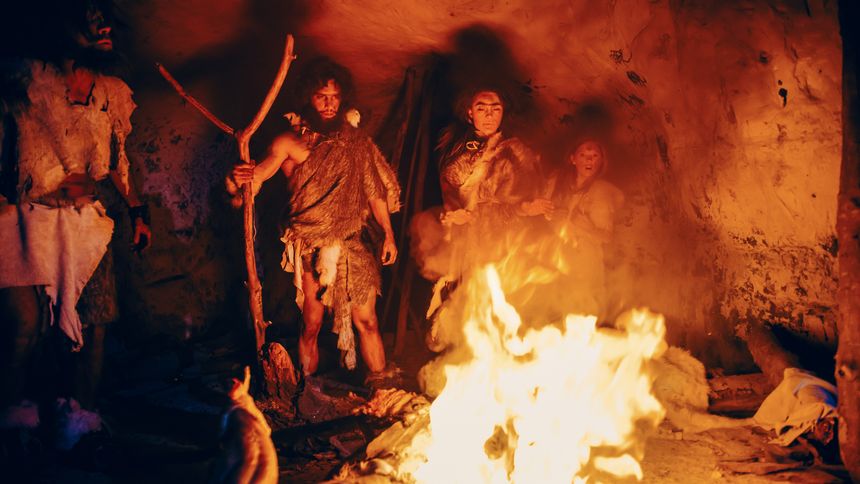
The ability to harness fire has to be one of the most important discoveries in the evolution of the human race. But why is the question that still remains a burning topic among researchers.
In a new study, researchers from Tel Aviv University proposed a new theory for what prompted humans to start making and controlling fires: to protect their food from animals, and, most notably, to extend the prehistoric shelf life of their meat through smoking and drying.
The scientists claim to be the first to propose this hypothesis, which aligns with a broader theory they’ve been developing: that humans’ consumption of large animals—and then smaller ones when the megafauna became extinct—drove important prehistoric developments.
This theory came from an analysis of all known prehistoric sites with evidence of fire use from between 1.8 million and 800,000 years ago, amounting to nine locations. Each of of these featured an abundance of large animal remains, including elephants, hippopotamuses, and rhinoceroses.
The meat and fat of a single elephant, for example, contain millions of calories, or enough to feed a group of 20–30 people for a month or more. A successfully hunted elephant or hippopotamus was a kind of meat and fat ‘bank’ that needed to be protected and preserved for many days since it was coveted not only by predators but also by bacteria.
While we already knew that ancient humans, including the iconic Ötzi the Iceman and ancient Native Americans in southwest Florida, were curing and smoking meats thousands of years ago, the researchers’ new theory predates this approach by hundreds of thousands of years, and contextualizes it within one of the most important prehistoric human developments known to science.
/Passle/60211dc9e5416a0c14bc63d4/SearchServiceImages/2026-10-16-11-16-08-226-6ad20778f0722e0f6fffd010.jpg)
/Passle/60211dc9e5416a0c14bc63d4/SearchServiceImages/2026-10-22-14-57-06-228-6ada2442594ea8e6e3b00785.jpg)
/Passle/60211dc9e5416a0c14bc63d4/SearchServiceImages/2026-10-15-08-01-34-892-6ad0885ed13e4bbdf6a6a870.jpg)
/Passle/60211dc9e5416a0c14bc63d4/SearchServiceImages/2026-10-06-17-19-56-342-6ac52dbc4e3377a132b46e72.jpg)