

The ocean can be soothing, a peaceful way to spend a day listening to the waves while the sun warms the soul. It can also be merciless and a major cause of catastrophe. And, as the sea levels rise so too can the destruction.
And now we are learning that the sea levels, which are a leading indicator of global warming, may be much higher than thought due to reliance on faulty data.
A recent study found that a staggering number of sea-level rise impact assessments are based on drastic underestimations of current sea levels. Of the 385 peer-reviewed scientific papers the authors analyzed, more than 90% relied on assumed sea levels based on gravitational models called “geoids” rather than direct sea-level and land-elevation measurements. Consequently, these assessments have underestimated the timing and severity of sea-level rise impacts.
After accounting for this widespread methodological issue, the authors determined that 3.28 feet (1 meter) of global sea level rise could inundate 37% more land area than previously thought, impacting 77 million to 132 million people across the globe.
That's quite a scary statistic when you consider Geoids are not based on direct, real-time sea-level measurements. These models are mathematical representations of Earth that approximate average sea level based on two factors: gravity and the planet’s rotation. They essentially represent the surface of the ocean in the absence of tides, winds, and currents.
But actual sea levels are constantly influenced by these forces, not to mention other factors such as temperature and salinity. Only direct measurements—primarily via tide gauges and satellite observations—can capture this complexity. While geoids can provide a theoretical baseline, using them as a starting point for sea-level rise projections and coastal hazard assessments inevitably leads to inaccuracies, as this new study shows.
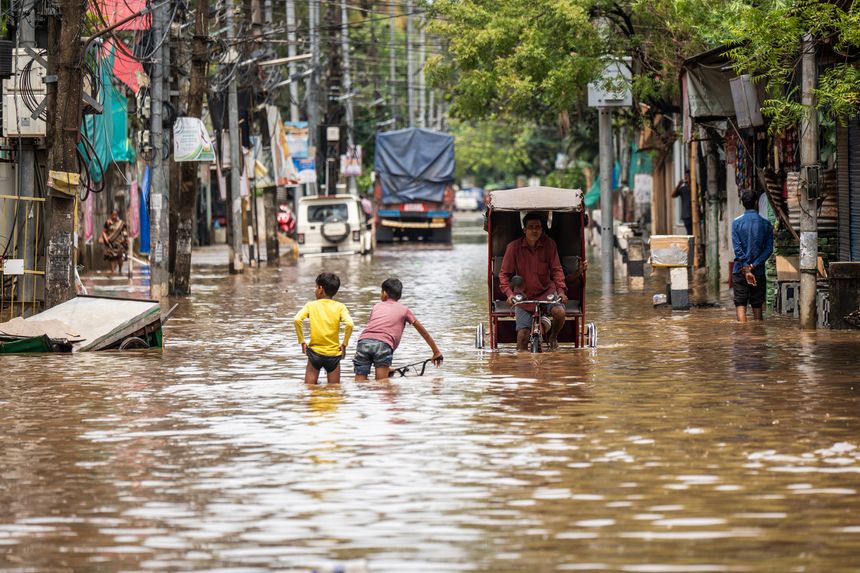
Most of the studies that the authors analyzed understated coastal sea levels by 9.4 to 10.6 inches (24 to 27 centimeters), depending on the geoid used. In areas where the models are least accurate—often in parts of the Global South—actual sea levels could be 18 to 24.9 feet (5.5 to 7.6 meters) higher than assumed. The greatest discrepancies were in Southeast Asia and the Pacific region, where many island nations are already experiencing catastrophic sea-level rise.
The authors hope their study helps the scientific community improve its methodology by providing open-source data and ready-to-use tools that facilitate the accurate alignment of land and sea-level measurements.
By charting a path toward more accurate coastal hazard research, the authors aim to help scientists and policymakers better protect communities from the accelerating impacts of sea-level rise. Their work could reshape planning and adaptation efforts, helping ensure that vulnerable regions receive the resources they need before it’s too late.
/Passle/60211dc9e5416a0c14bc63d4/SearchServiceImages/2026-10-13-15-16-49-499-6ace4b61477453bcaa2e95ec.jpg)
/Passle/60211dc9e5416a0c14bc63d4/SearchServiceImages/2026-10-07-03-07-28-884-6ac5b770e2138e97236d8711.jpg)
/Passle/60211dc9e5416a0c14bc63d4/SearchServiceImages/2026-10-03-02-21-11-638-6ac066977c1a0b1c3a065bb9.jpg)
/Passle/60211dc9e5416a0c14bc63d4/SearchServiceImages/2026-09-27-17-44-10-859-6ab955eaef3ecc8443aa618d.jpg)




