

I've had a few cases of poison ivy, and reading this story almost made me start itching again. Unfortunately, I get very bad rashes from exposure and this the last thing I wanted to read was how poison ivy is getting more resilient now.
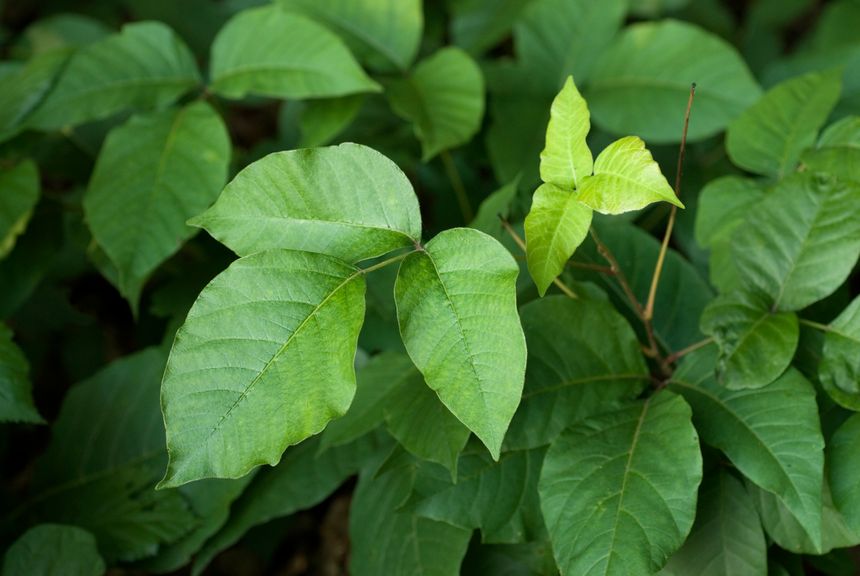
If you live in areas where there is a lot of poison ivy, you may have noticed that the plant appears to be thriving lately. The leaves are looking leafier, the vines more prolific. Your poison ivy rash may even feel more itchy. It’s not your imagination. Research shows that the main culprit behind climate change — increased concentrations of carbon dioxide in the atmosphere — is supercharging poison ivy.
The effect has been known since 2006, when Duke University researchers published a six-year study that showed poison ivy grew double its normal size when it was exposed to higher levels of carbon dioxide — levels on a par with the atmospheric carbon scientists anticipate seeing around 2050. The leaves on some individual plants grew by as much as 60 percent. Researchers also found that CO2 makes urushiol, the oil in poison ivy that causes the allergic reaction in humans, stronger. Plants rely on CO2 to make the sugars they need to grow, and increased concentrations of it were helping everyone’s least favorite plant thrive. The researchers surmised that increased levels of CO2 in coming decades would lead to bigger, faster growing, and itchier poison ivy plants.
The Forest Service found that between 70 and 85 percent of the population is sensitive to urushiol, and people are likely to become more allergic to it every time they are exposed.
Yeah, that's not great news, is it! Watch out for those “leaves of three!”
/Passle/60211dc9e5416a0c14bc63d4/SearchServiceImages/2026-09-08-15-59-47-905-6aa030f3d27ce9f0cbae7a79.jpg)
/Passle/60211dc9e5416a0c14bc63d4/SearchServiceImages/2026-09-09-15-01-38-177-6aa174d2313dbadbe82c2a01.jpg)
/Passle/60211dc9e5416a0c14bc63d4/SearchServiceImages/2026-09-04-10-40-38-568-6a9aa0260d5bc279697263a2.jpg)
/Passle/60211dc9e5416a0c14bc63d4/SearchServiceImages/2026-09-03-15-41-56-326-6a9995447466c353608b5180.jpg)