

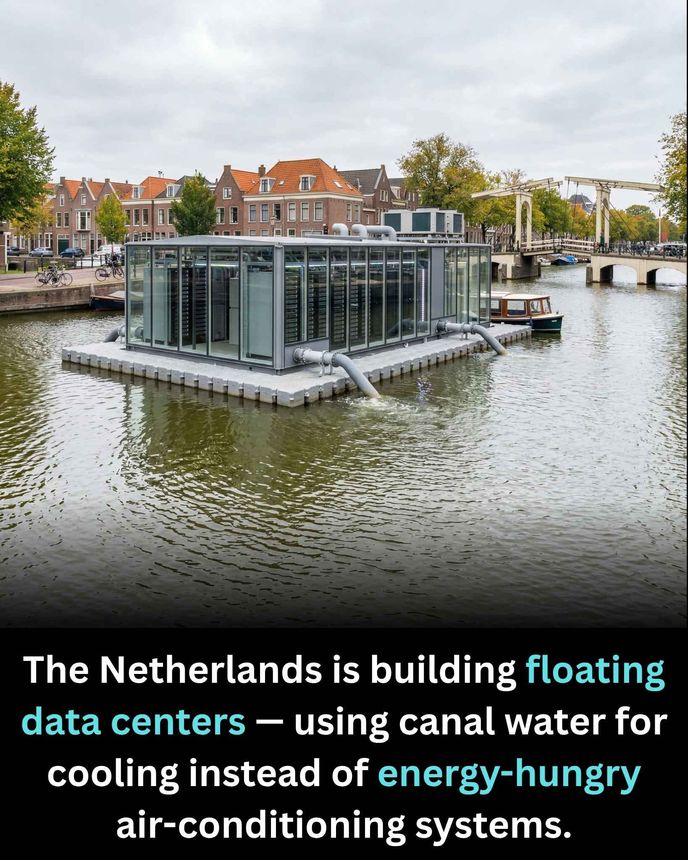
The Netherlands is taking a bold step in reimagining digital infrastructure, bringing data centers onto the water. By deploying floating facilities in canals and waterways, operators are leveraging natural water cooling to dramatically reduce reliance on energy-intensive air-conditioning systems. The result is a meaningful reduction in power consumption, operating costs, and carbon emissions, while also addressing one of Europe’s biggest constraints: land availability in dense urban environments like Amsterdam.
But this innovation is about more than location—it reflects a broader shift in how data centers are designed, powered, and regulated.
Driven by AI, cloud computing, and rapid digitalization, data centers are expanding at an unprecedented rate. In parallel, they are being reclassified—not just as technology hubs, but as high-impact energy and environmental assets.
This shift is reshaping regulatory expectations.
What was once a relatively straightforward path to approval has evolved into a complex framework requiring operators to demonstrate:
- Responsible energy consumption and grid impact
- Measurable sustainability and emissions performance
- Efficient water usage and cooling strategies
- Alignment with zoning, noise, and community requirements
- Long-term lifecycle and decommissioning planning
In markets like the Netherlands, these pressures are already influencing where and how data centers can be built. Globally, similar scrutiny is quickly following.
Floating data centers are a clear example of how engineering innovation can align with regulatory and environmental demands. By integrating natural resources into infrastructure design, operators can proactively address compliance challenges while improving efficiency.
However, innovation alone is not enough.
As regulatory frameworks evolve, success will depend on the ability to validate performance, demonstrate compliance, and de-risk deployment across multiple domains—from electrical safety to environmental impact.
/Passle/60211dc9e5416a0c14bc63d4/SearchServiceImages/2026-09-21-14-44-06-794-6ab142b68d381308c46013e3.jpg)
/Passle/60211dc9e5416a0c14bc63d4/SearchServiceImages/2026-09-22-20-55-53-229-6ab2eb59e77aebe36a19438f.jpg)
/Passle/60211dc9e5416a0c14bc63d4/SearchServiceImages/2026-09-27-15-40-51-115-6ab939039006ba25977a837e.jpg)
/Passle/60211dc9e5416a0c14bc63d4/SearchServiceImages/2026-09-24-10-34-45-556-6ab4fcc5ce1e0391003c4632.jpg)