

I use VoiceOver every day. On my iPhone. On my Mac. On my iPad. It is not an optional extra or a clever experiment. It is how I work, how I read, how I communicate. So when Apple announces that VoiceOver is getting smarter, I pay attention.
On 19 May 2026, Apple previewed a suite of accessibility updates powered by Apple Intelligence, the company’s on-device AI system. The updates bring new capabilities to several built-in tools that disabled people rely on daily.
These updates matter. Let me explain why, and what these tools actually do.
What Apple Announced
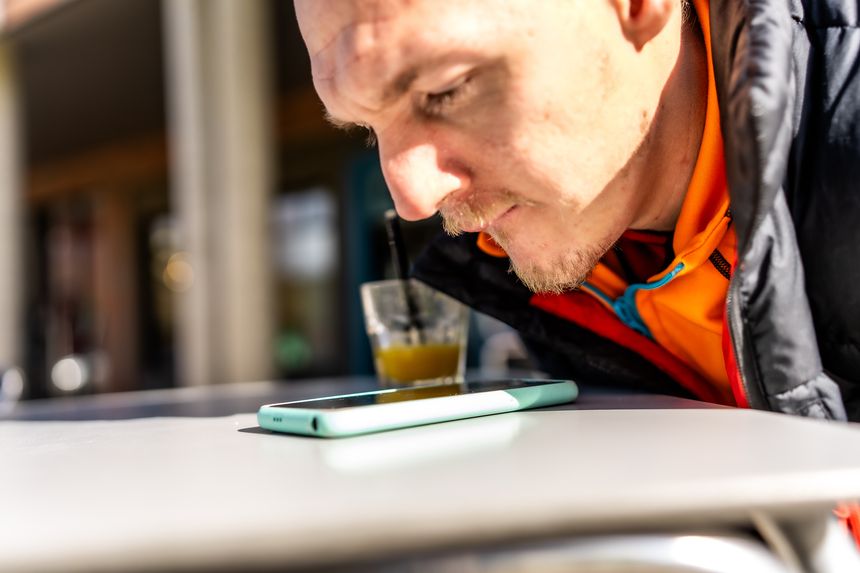
VoiceOver is Apple’s built-in screen reader. It reads everything on screen aloud, including menus, buttons, messages, and images, so that blind and low vision users can navigate their devices without needing to see the screen. VoiceOver now gains a new Image Explorer, using Apple Intelligence to deliver more detailed descriptions of images across the entire system. Photographs, scanned bills, personal records. You can now press the Action button on iPhone, ask a question about what the camera sees, and get a full response. You can ask follow-up questions in your own words.
Magnifier is an app that turns the iPhone or iPad camera into a powerful visual aid, letting users zoom in on the world around them with high contrast and customisable settings. It gets the same Apple Intelligence treatment, so users can now ask spoken questions and get detailed answers about what the camera sees. Spoken requests also control the app itself: “zoom in”, “turn on flashlight.”
Voice Control is a feature that lets users navigate their iPhone or iPad entirely by voice, without touching the screen, which is essential for people with physical disabilities affecting their hands or arms. With Apple Intelligence, it becomes genuinely conversational. Instead of memorising exact button labels or numbers, users can describe what they see: “tap the guide about best restaurants”, “tap the purple folder.” For apps where elements are not properly labelled for accessibility, this is a meaningful safety net.
Accessibility Reader is a customised reading mode that reformats text for people with dyslexia, low vision, or other reading difficulties, letting users choose their own fonts, colours, and layout. It now handles complex source material: multi-column scientific articles, tables, documents with images. On-demand summaries let you get an overview before committing to the full read. Built-in translation keeps your custom fonts and colours intact.
Generated subtitles will appear automatically for uncaptioned videos across iPhone, iPad, Mac, Apple TV, and Apple Vision Pro. Personal videos, content from friends and family, informal media. For deaf and hard of hearing users, these are the moments that have always fallen through the gaps.
And for Apple Vision Pro users with physical disabilities, a new wheelchair control feature uses the headset’s precision eye-tracking to drive compatible power wheelchairs directly. No joystick required. No recalibration.
“The accessibility features our users rely on every day become even more powerful with Apple Intelligence. With these updates, we’re bringing new, intuitive options for input, exploration, and personalisation, designed to protect users’ privacy at every step.”
Sarah Herrlinger, Senior Director of Global Accessibility Policy and Initiatives, Apple
Every Feature Helps. None of It Is a Substitute.
I want to be direct here, because I think the accessibility tech conversation often loses this.
These features are genuinely useful. The Image Explorer in VoiceOver will reduce the number of times I encounter an image described only as “image.” The ability to ask follow-up questions about what my camera sees is powerful. Natural language Voice Control means less time memorising interface labels and more time getting things done.
But these are reductions in friction. They are not sight.
I still cannot read a printed menu in a restaurant. I still cannot confidently cross a busy road on my own without planning. I still cannot help my children navigate something they want to show me on paper. Every feature Apple releases chips away at the energy cost of navigating a world built for sighted people. But it does not eliminate it.
Disabled people carry an energy tax that non-disabled people rarely think about. Every inaccessible form, every unlabelled button, every video without captions, every image without alt text: these are withdrawals from a daily budget that is already stretched. When Apple improves VoiceOver, they reduce that tax. When developers and designers fail to label their buttons properly, they raise it again.
That is the honest framing. Progress is real. The work is not done.
This Is Not Just for Disabled People
Here is the part that often gets missed in these announcements.
Disability is not a fixed category. A broken arm makes a touch screen frustrating. Bright sunlight makes a small screen unreadable. A noisy environment makes audio impossible to follow. A parent holding a baby needs one-handed navigation. Ageing gradually changes how clearly we see text, how easily we navigate small interface elements, how well we process fast-moving audio.
The WHO estimates that 1.3 billion people worldwide, approximately 1 in 6, currently experience significant disability. And that number is rising, driven in part by an ageing global population. The same features that help me navigate VoiceOver daily are the features that will help millions of people as their sight, hearing, or dexterity changes with age.
Generated subtitles are a clear example. Designed for deaf and hard of hearing users, they will be quietly used by people in noisy environments, by those whose hearing is beginning to change, and by people watching content in a language they are still learning. Larger Text on tvOS benefits low vision users and anyone sitting further from the screen. Natural language Voice Control helps people with physical disabilities and anyone with their hands full.
When you design for the edges, you improve the experience for everyone. Apple understands this. It is why their accessibility features are built into the same devices everyone uses, not shipped as separate products.
Why Mainstream Matters
I have written about Apple’s commitment to accessibility a number of times. In Apple Accessibility Game Changers in 2022, I highlighted Door Detection and Live Captions. In Apple Introduces New Accessibility Features (2023), it was Personal Voice and Point and Speak. In Apple Announce New Accessibility Features GAAD 2024, Eye Tracking arrived, built into the device with no extra hardware. And last December, in Apple’s Latest Accessibility Film Shows Everyday Inclusion in Action, I wrote about the quiet power of showing accessibility as ordinary, unremarkable: just people using devices that work for them.
What makes Apple’s approach distinct is not the feature list. It is the distribution.
VoiceOver with Apple Intelligence does not require a specialist device, a third-party add-on, or a subscription service. It is on the same iPhone that my colleagues use, my family uses, that you can buy in any Apple Store. That is the principle that matters. When accessibility is built into mainstream technology, it benefits everyone, and it removes the stigma of needing a “special” device.
Takeaway
Apple keeps raising the floor. Each year the baseline improves, and the energy cost of being a disabled person in a digital world decreases, a little. That matters enormously to me, and to the 1.3 billion people worldwide living with significant disability.
The work is not finished. Inaccessible products, unlabelled buttons, and uncaptioned videos remain common. But the direction is right, and the momentum is real. Every step forward counts.
If your organisation is still treating accessibility as a future priority, consider what Apple is demonstrating. Accessibility is not a niche. It is a design foundation that makes technology better for everyone, including the people who do not yet know they will need it.
Sources: Apple unveils new accessibility features, and updates powered by Apple Intelligence, announced 19 May 2026. WHO: Disability.
/Passle/60211dc9e5416a0c14bc63d4/SearchServiceImages/2026-09-21-14-44-06-794-6ab142b68d381308c46013e3.jpg)
/Passle/60211dc9e5416a0c14bc63d4/SearchServiceImages/2026-09-22-20-55-53-229-6ab2eb59e77aebe36a19438f.jpg)
/Passle/60211dc9e5416a0c14bc63d4/SearchServiceImages/2026-09-27-15-40-51-115-6ab939039006ba25977a837e.jpg)
/Passle/60211dc9e5416a0c14bc63d4/SearchServiceImages/2026-09-24-10-34-45-556-6ab4fcc5ce1e0391003c4632.jpg)