


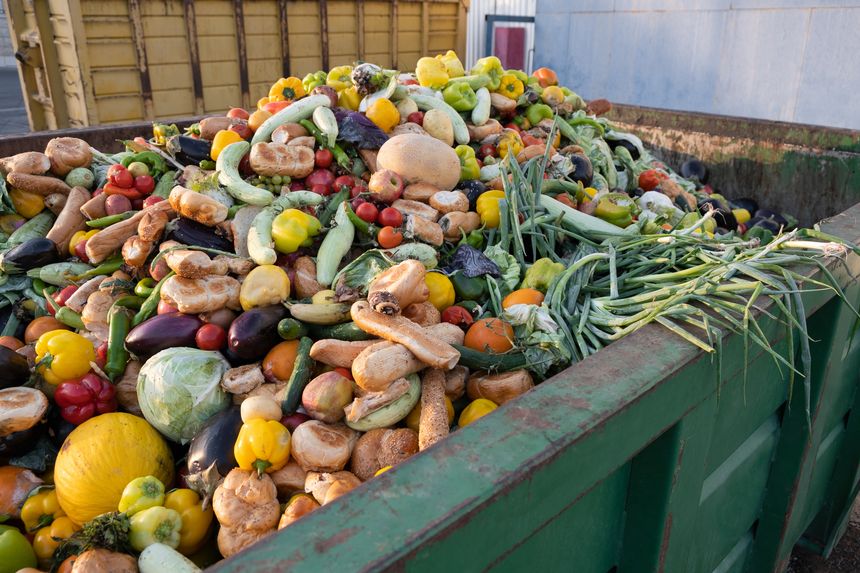
Food waste is often framed as a social issue, but this article effectively highlights its profound environmental consequences. One of the most striking insights is that roughly one-third of all food produced globally is wasted, representing a massive loss of resources and opportunity.
What stands out is the “hidden footprint” behind wasted food. When food is discarded, we are not just wasting the product itself - we are also wasting the land, water, energy, and labour required to produce it. This inefficiency contributes significantly to environmental degradation and biodiversity loss.
Equally concerning is the climate impact. Food waste accounts for around 8–10% of global greenhouse gas emissions, and when it decomposes in landfills, it releases methane—a gas far more potent than CO₂. This positions food waste as a major, yet often overlooked, driver of climate change.
From a business and systems perspective, the article reinforces the need to shift toward more circular food systems, where waste is minimized and resources are continuously reused. Addressing food waste is not just about individual behaviour; it requires coordinated action across supply chains, from production to consumption.
Ultimately, reducing food waste represents one of the most immediate and scalable opportunities to lower environmental impact while improving global food security
/Passle/60211dc9e5416a0c14bc63d4/SearchServiceImages/2026-09-21-14-44-06-794-6ab142b68d381308c46013e3.jpg)
/Passle/60211dc9e5416a0c14bc63d4/SearchServiceImages/2026-09-22-20-55-53-229-6ab2eb59e77aebe36a19438f.jpg)
/Passle/60211dc9e5416a0c14bc63d4/SearchServiceImages/2026-09-27-15-40-51-115-6ab939039006ba25977a837e.jpg)
/Passle/60211dc9e5416a0c14bc63d4/SearchServiceImages/2026-09-24-10-34-45-556-6ab4fcc5ce1e0391003c4632.jpg)