
Just because school is on summer break, or even just a weekend break, kids think they are not learning. They are wrong. Learning comes in different forms that just the classroom, and in all honestly, we never stop learning throughout our entire lives.
For Danish learning expert Knud Illeris, any process not caused by biological maturation (for instance, growing from a baby into a toddler) counts as learning. Learning is both inevitable and ubiquitous: it is part of being alive. We cannot “not learn”.
Young people, in particular, may overvalue formal learning for two reasons. First, it is tangible. It features physical buildings – schools, colleges and universities – where young people go almost every day to learn. In turn, they aim to leave these buildings with qualifications that “prove” what they have learned.
To encourage young people to flourish as learners, we need to help them value non-formal and informal learning contexts. Hobbies are great for this. Hobbies are serious leisure activities which young people find interesting and fulfilling. They are serious because hobbies require perseverance to gain experience, a skillset and a knowledge base.
Whenever someone intentionally teaches a young person something hobby-related, that counts as non-formal learning. For instance, a coach explaining how to bounce a basketball, a music teacher describing how to hold a drumstick, or a friend explaining the rules to a board game.
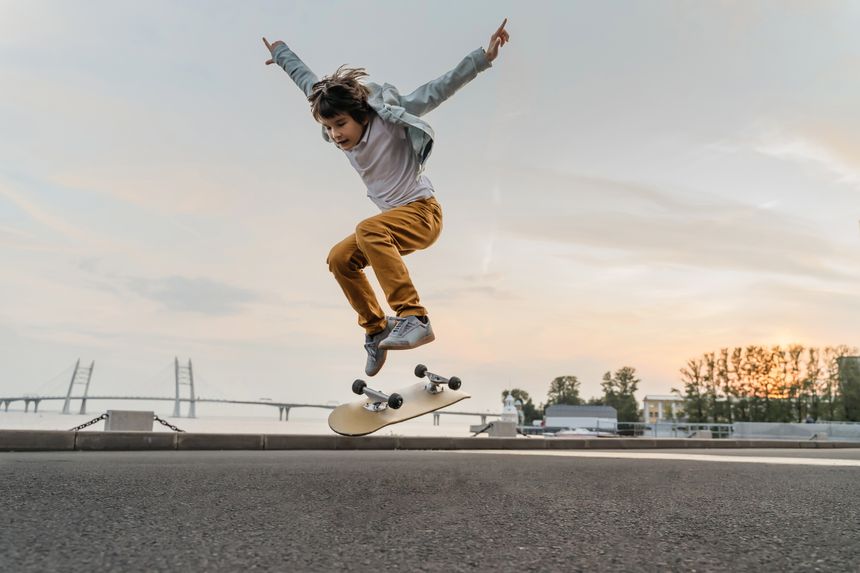
Hobbies are equally infused with informal, unplanned and often unconscious learning. Playing video games inadvertently develops eye-hand coordination and cognitive function (storing and processing information). Stamp collecting can foster attention to detail. Skateboarding can improve resilience in the face of failure.
Part of the reason young people’s non-formal and informal hobby-related learning above is so difficult to recognize is because it is rarely described as “learning”. Instead, they “play” music and videogames; they “do” skateboarding and drawing.
Too many young people think they are “bad learners” because they struggle in formal learning. However, I bet they are extraordinary learners when it comes to their hobbies. We simply need to help them recognize the value of non-formal and informal learning.
/Passle/60211dc9e5416a0c14bc63d4/MediaLibrary/Images/2024-07-25-19-34-58-437-66a2a8e2012a075bf2d3886e.jpg)
/Passle/60211dc9e5416a0c14bc63d4/SearchServiceImages/2026-08-28-21-08-00-332-6a91f8b0de355275bbc2047e.jpg)
/Passle/60211dc9e5416a0c14bc63d4/SearchServiceImages/2026-09-01-19-40-59-331-6a972a4bf9386af8ea707113.jpg)
/Passle/60211dc9e5416a0c14bc63d4/SearchServiceImages/2026-09-03-11-57-48-238-6a9960bc7466c353608a92a5.jpg)