

I bet you never realized that we already have a computer that’s far more powerful than any AI out there, and it uses a fraction of a percent of the energy to do so. Can you guess what it is?
No? Here's another clue: You already own one. It was assigned to you at birth!
“The human brain is an amazingly energy-efficient device,” wrote Advait Madhavan, a research scientist at the National Institute of Standards and Technology (NIST). “In computing terms, it can perform the equivalent of an exaflop – a billion-billion (1 followed by 18 zeros) mathematical operations per second – with just 20 watts of power.”
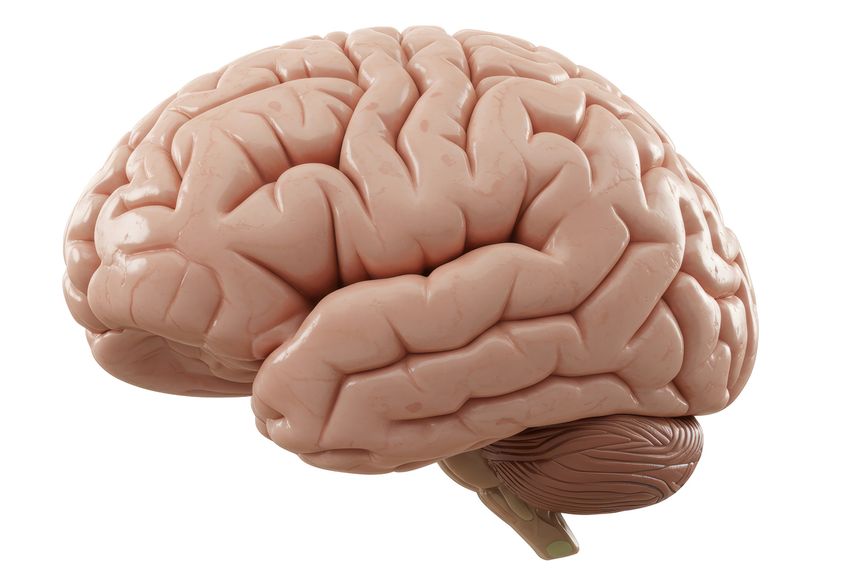
Considered as an organ, the brain is admittedly extremely energy-hungry: it accounts for only about two percent of your body by weight, but about 20 percent of your basal energy consumption. But objectively, that’s not very much – given an average daily intake of, say, 2,700 calories, it only adds up to a paltry 340 or so to power the brain.
It’s the equivalent of 0.4 kilowatt-hours – enough to power an old-fashioned 60W incandescent lightbulb for less than seven hours. It’s less than the amount of energy you’d get from three bananas.
While Artificial Intelligence is quickly becoming smarter and smarter, scientists are studying how the brain processes information so that these machines can become far more efficient than they are today.
And that partly comes down to how computers and AI solve a task. They do it sequentially.
Take, for example, the goal of catching a ball. A computer would have to notice the ball first, measure its movement second, calculate its trajectory third, estimate an end location fourth, before finally sending your hand to the desired location. Your brain, on the other hand, does all that almost at once working with your eyes to determine the location, direction, and speed of the ball. Then the brain sends commands control muscle contraction in the legs, the trunk, the arms, and the wrist, such that the body and the arms are simultaneously well positioned to catch the ball.
The idea is to make a computer think in terms of these same multiple processes simultaneously so that it can be faster, and use less energy. Like a human!
/Passle/60211dc9e5416a0c14bc63d4/SearchServiceImages/2026-09-15-17-58-27-875-6aa987430810fd5205abc3e8.jpg)
/Passle/60211dc9e5416a0c14bc63d4/MediaLibrary/Images/2026-09-17-13-58-04-341-6aabf1ecd83deebed679a4a3.png)
/Passle/60211dc9e5416a0c14bc63d4/SearchServiceImages/2026-09-14-11-49-29-568-6aa7df49942e1ead4d7a1eb4.jpg)
/Passle/60211dc9e5416a0c14bc63d4/SearchServiceImages/2026-09-08-15-36-47-617-6aa02b8fd27ce9f0cbae682e.jpg)