
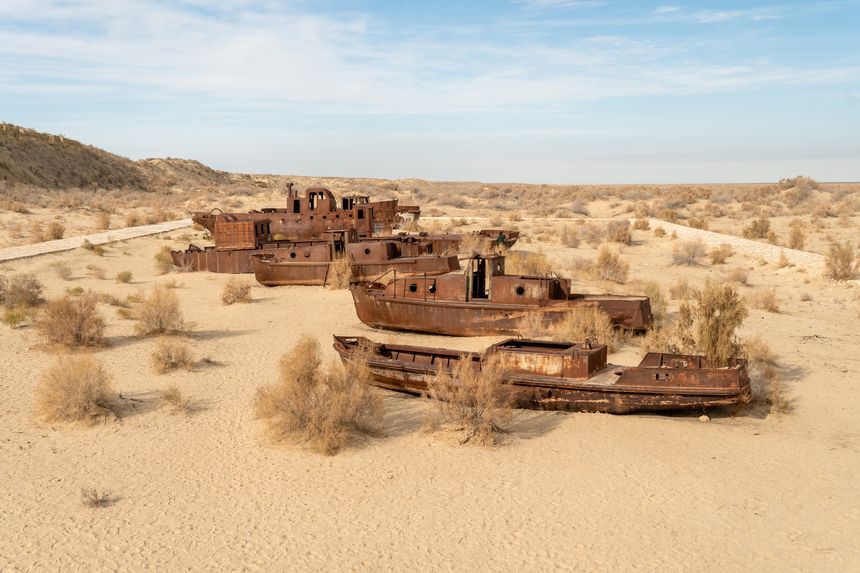
The story of the Aral Sea sits in an uncomfortable space between hope and limits. Once the world’s fourth-largest lake, it has been reduced dramatically after decades of diverting the rivers that fed it for agriculture, leaving behind ecological and economic collapse.
What makes the current restoration efforts meaningful is not that they promise a full recovery, but that they show recovery is still possible in fragments. The northern portion of the sea has seen measurable improvement through targeted intervention, proving that even large-scale environmental damage can be partially reversed with the right focus and coordination. Yet the broader reality remains: restoring the entire system would require changes so extreme, such as halting regional economic activity for decades, that they are widely considered unrealistic.
That tension is the real story. It reframes sustainability from an ideal outcome to a series of trade-offs. The Aral Sea is no longer just a cautionary tale about environmental mismanagement. It is becoming a case study in how societies decide what is worth saving, what can be salvaged, and what must be adapted to instead.
In a world facing increasing freshwater pressure, that shift in thinking matters. The future of resource management may depend less on restoring systems to what they were, and more on defining what viable recovery actually looks like.
/Passle/60211dc9e5416a0c14bc63d4/SearchServiceImages/2026-10-09-14-47-29-978-6ac8fe81bf2cf47546e7c7c8.jpg)
/Passle/60211dc9e5416a0c14bc63d4/SearchServiceImages/2026-10-16-15-04-20-057-6ad23cf4b378b0c78cece71b.jpg)
/Passle/60211dc9e5416a0c14bc63d4/SearchServiceImages/2026-10-16-11-16-08-226-6ad20778f0722e0f6fffd010.jpg)
/Passle/60211dc9e5416a0c14bc63d4/SearchServiceImages/2026-10-22-14-57-06-228-6ada2442594ea8e6e3b00785.jpg)