
It sounds as though recycling should be easy. Toss all plastics, cardboard, papers and other items with the famous triangular logo into the bin and it all magically gets repurposed!
But unfortunately, it's not always quite as easy as the PR campaigns make it out to be. Sometimes that cardboard box has a plastic coating. Or there's a bit of grease and melted cheese stuck on that pizza box.
“Ah, it will work out. I'm sure it can be recycled,” you think to yourself hoping for the best, dropping it in the bin, and just like that, you've “wishcycled.”
Wishcycling is when you put something in the recycle bin because you want to recycle it. You hope it will get turned into some shiny new object. But you don’t really know if it will and so you decide to let someone else down the line figure it out for you.
The antidote to wishcycling is pretty simple: Don’t make assumptions and take the time to learn which items are recyclable in your area. There are local web pages with the “do's and don'ts” in your local recycling program.
The whole concept of recycling is based on economics. Recycling was a $2.9 billion business in 2020 and like all markets, it’s based on supply and demand. There’s big demand for certain types of materials, like cardboard Amazon boxes and plastic Miracle Whip jars. But for some materials—like milk cartons—there are fewer processors who can break down the multi-layered material and therefore less of a recycling market for it.
But we all focused on “The Big Five” most common recycling mistakes, it would be a huge win for the recycling world and the planet.
The Big Five Curbside Recycling Mistakes
Plastic Bags
Filmy plastic (aka “soft film”) of any kind, including zipper-locks, bubble wrap, plastic padded Amazon envelopes, garbage bags, wrap from toilet paper, and bread bags, don’t work in any single-stream recycling system.
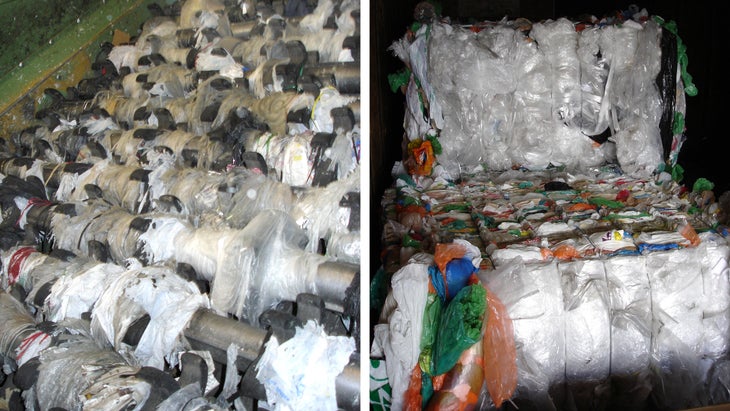
Why it’s a problem: Soft film jams machinery. Workers have to hit the kill switch on the whole operation and manually pull it out of the system. It can also tangle up with other valuable recyclables and then the whole mess gets landfilled rather than sold and repurposed. And if you bag perfectly good recyclables, like plastic water bottles and paper, the whole bag will get landfilled because workers don’t have the bandwidth to unbag and sort them.
The solution: Many grocery stores across the country accept soft film and recycle it properly.
Un-Rinsed Containers
Why it’s a problem: Two reasons: Old peanut butter and congealed sauce from your General Tso chicken degrades the value of the material you’re recycling (which defeats the whole purpose). And it can also pose health and safety risks to human workers who have to handle the nastiness and deal with the rats and wasps that get attracted to the facility.
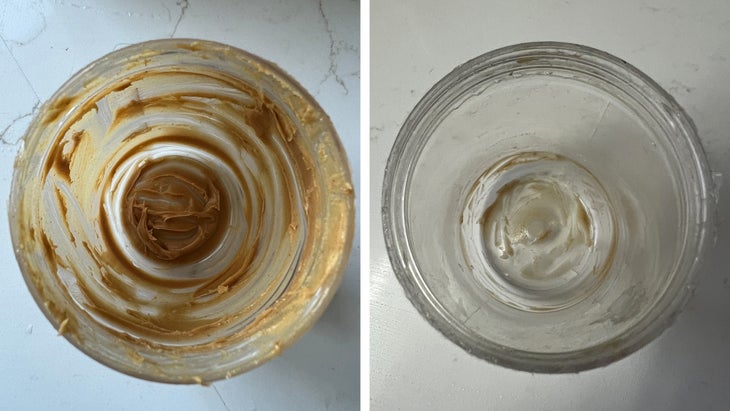
The solution: Give your stuff a quick rinse (no need for soap or elbow grease) to remove the majority of the gunk. Or better yet, save water and give your pet another reason to love you. Dogs and cats do a very good job of licking food containers clean.
Rigid Plastic
Single-stream recycling is designed to take rigid, single-use plastic containers from food, drinks, and nonhazardous cleaning materials like shampoo and laundry soap. But don’t assume all plastic is single-stream recyclable. On most plastic, you can find a number inside a triangle of chasing arrows or letters next to it (like PET or HDPE). The numbers and letters, called Resin Identification Codes (or RICs) indicate the type of plastic, but they were never designed for consumer education.
It is best to simply ignore the numbers and instead become familiar with your local recycling rules. A good general approach is using the container rule, which simply means single-use rigid plastic containers only, like water, soda, and salad dressing bottles, salad containers, and shampoo bottles. The system isn’t designed to take durable plastic items like storage bins, flip-flops, pens, toys, sunglasses, or hampers because items need to be sorted and baled with like products. The recycler can’t collect enough pens, for instance, to create a marketable 35,000-pound load for them to sell.
The solution: Ask yourself, “Is this a single-use container?” If yes, bin it, regardless of the numbers or letters inside the arrows. If not, trash it. And try to avoid buying anything plastic if you can.
Scrap Metal
The container rule applies here, too. Only empty metal food, drink, and nonhazardous cleaning materials containers belong in your bin, like drink, soup, and olive oil cans.
Why it’s a problem: Other metal objects like silverware, bottle caps, metal jar lids, blades from safety razors, and wire hangers can be extremely dangerous for workers and damage recycling machinery.
The solution: Save those items and find a local scrap metal recycler (just Google it!). Metal has value—you might even make a few bucks.
Batteries
Batteries—especially lithium ions—are huge no-nos for curbside recycling and have caused a remarkable number of fires at recycling facilities, landfills, transfer stations, and even during transport.
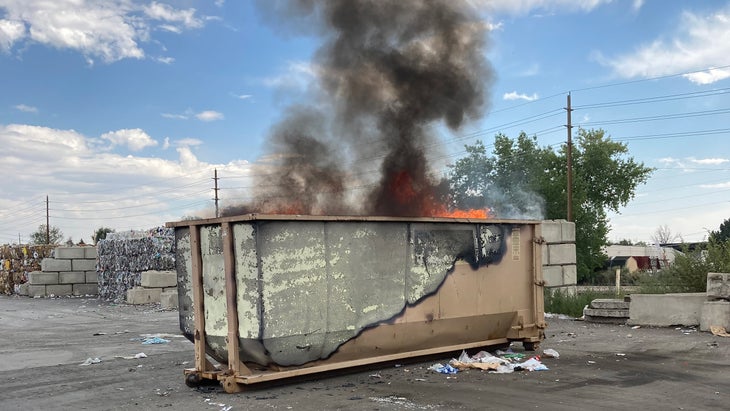
Why it’s a problem: Batteries are extremely sensitive to heat and friction. And, trust me, there’s a whole lot of friction going on at recycling centers. Think: complex mazes of converter belts, metal teeth, grinding gears, vibrating steel mesh, and high-powered magnets and vacuums.)
The solution: Save them in a box and ask your town or local recycling center for the nearest drop-off.
/Passle/60211dc9e5416a0c14bc63d4/MediaLibrary/Images/2024-07-25-19-34-58-437-66a2a8e2012a075bf2d3886e.jpg)
/Passle/60211dc9e5416a0c14bc63d4/SearchServiceImages/2026-08-28-21-08-00-332-6a91f8b0de355275bbc2047e.jpg)
/Passle/60211dc9e5416a0c14bc63d4/SearchServiceImages/2026-09-01-19-40-59-331-6a972a4bf9386af8ea707113.jpg)
/Passle/60211dc9e5416a0c14bc63d4/SearchServiceImages/2026-09-03-11-57-48-238-6a9960bc7466c353608a92a5.jpg)