
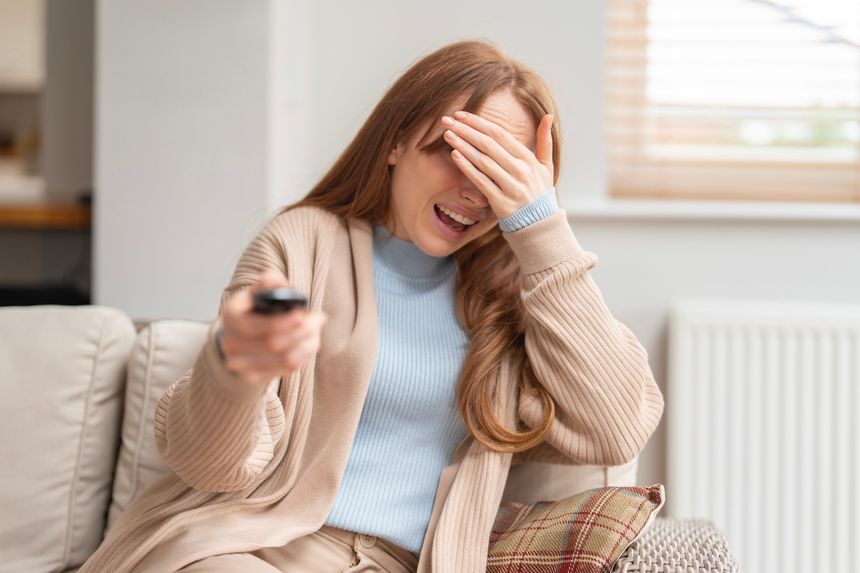
Have you even been watching a movie, or TV show, or even a clip on social media where someone gets hurt badly. If you are like me you probably diverted your eyes at the crucial point, and maybe even felt something in the pit of your stomach.
You (and I) are not alone in this phenomenon. Wincing at the sight of a movie character slowly stepping on a nail or slamming their fingers in a car door is an experience we can all relate to. When we watch people on-screen get injured, we tend to have a physical reaction even though we are in the comfort of our own home.
The reason behind these reactions has puzzled scientists for decades. But a new study, published in Nature, may have found the answer. When watching a movie, our brain doesn’t just visually process the information on the screen — it simulates what we see, making the sensation reverberate through our body.
“When you watch someone being tickled or getting hurt, areas of the brain that process touch light up in patterns that match the body part involved,” said Nicholas Hedger, the study’s lead author. “Your brain maps what you see onto your own body, ‘simulating’ a touch sensation even though nothing physical happened to you.”
The research team refers to this connection as a type of sensory “map” that helps the brain process visual and sensory cues. The connection also works in both directions, with our sense of touch activating the visual areas of our brain in low-visibility situations.
“This cross-talk works in the other direction, too. For example, when you navigate the bathroom in the dark, touch sensations help your visual system create an internal map of where things are, even with minimal visual input,” explained Hedger. “This ‘filling in’ reflects our different senses cooperating to generate a coherent picture of the world.”
Although discovering a new brain connection is exciting in and of itself, the researchers are particularly excited about the clinical applications of their research.
Traditional sensory testing for neurodivergent individuals — especially autistic children — can be overwhelming and exhausting. But if the brain’s responses to touch can be measured visually while watching a movie, medical professionals can replace stressful procedures with less invasive options.
/Passle/60211dc9e5416a0c14bc63d4/SearchServiceImages/2026-09-08-13-31-06-860-6aa00e1abf0283d03a3c6875.jpg)
/Passle/60211dc9e5416a0c14bc63d4/MediaLibrary/Images/2024-07-25-19-34-58-437-66a2a8e2012a075bf2d3886e.jpg)
/Passle/60211dc9e5416a0c14bc63d4/SearchServiceImages/2026-08-28-21-08-00-332-6a91f8b0de355275bbc2047e.jpg)
/Passle/60211dc9e5416a0c14bc63d4/SearchServiceImages/2026-09-01-19-40-59-331-6a972a4bf9386af8ea707113.jpg)