

What if the solar farms we build to fight climate change could also help grow more food? That idea might sound counterintuitive, but new research suggests the two goals may actually work better together than apart.
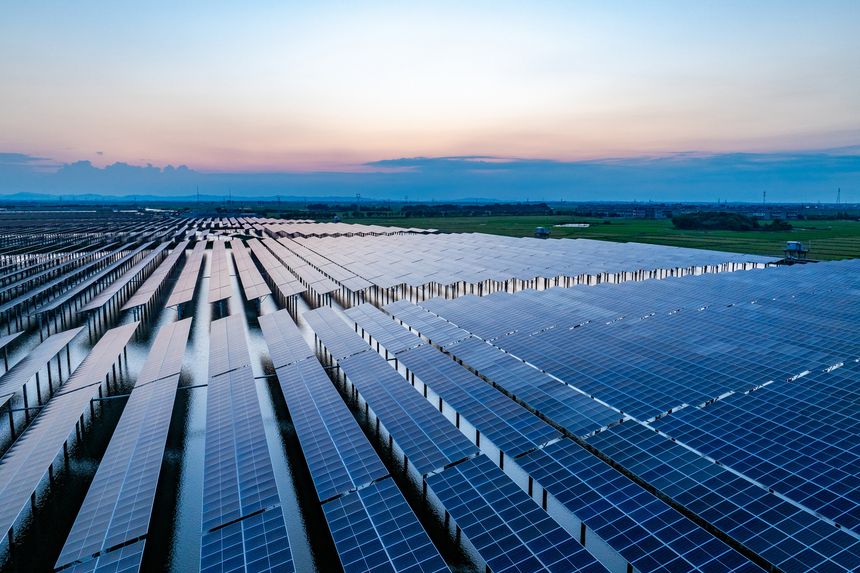
The article highlights the growing potential of agrivoltaics, a system where crops are grown beneath or between solar panels. Instead of competing with agriculture for land, solar arrays can create a protective microclimate that shields plants from extreme heat, hail, and other weather stresses. This partial shading can help crops retain moisture and maintain healthier soil conditions.
A recent Canadian study found that this effect could be surprisingly large. By moderating temperatures and reducing heat stress on plants, solar panels could boost crop yields significantly. Modelling suggests that the passive shade from solar installations could add hundreds of billions of pounds of agricultural output globally.
What I find most exciting is how this idea reframes the conversation about renewable energy. Solar development is often criticized for taking up valuable farmland, but agrivoltaics shows that the same land can deliver both clean electricity and stronger agricultural resilience.
As climate pressures grow, farmers will need tools that help crops survive hotter temperatures and unpredictable weather. Solar panels may turn out to be one of those tools. Sometimes the most powerful innovations come from combining two solutions into one.
/Passle/60211dc9e5416a0c14bc63d4/SearchServiceImages/2026-09-08-13-31-06-860-6aa00e1abf0283d03a3c6875.jpg)
/Passle/60211dc9e5416a0c14bc63d4/MediaLibrary/Images/2024-07-25-19-34-58-437-66a2a8e2012a075bf2d3886e.jpg)
/Passle/60211dc9e5416a0c14bc63d4/SearchServiceImages/2026-08-28-21-08-00-332-6a91f8b0de355275bbc2047e.jpg)
/Passle/60211dc9e5416a0c14bc63d4/SearchServiceImages/2026-09-01-19-40-59-331-6a972a4bf9386af8ea707113.jpg)




