

I came across a fascinating story recently about how architecture can help us see something that is normally invisible: the air we breathe.
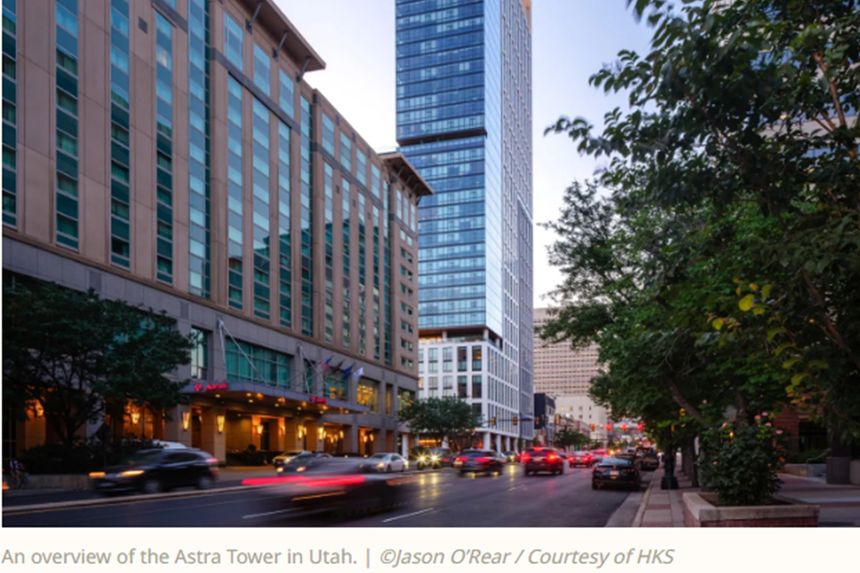
In Salt Lake City, the new Astra Tower now stands as the tallest building in Utah, rising more than 450 feet above the skyline. But what makes it remarkable is not just its height. The tower has been designed to track and communicate air quality in real time.
At the top of the building, an illuminated crown changes color based on pollution levels. White signals good air quality, while orange, red, or purple indicate worsening conditions. In a city where air inversions can trap pollution in the valley, the building effectively turns the skyline into a public environmental dashboard.
Inside the tower, sensors also feed live air quality data to elevator displays and lobby screens so residents can stay aware of the conditions around them.
What I find compelling is the philosophy behind it. The building was designed not just as a place to live, but as a vertical community focused on wellness and environmental responsibility, with filtration systems that clean incoming air and energy systems designed to reduce overall impact.
It is a reminder that the built environment can do more than house us. It can educate us. It can protect us. And sometimes it can even change the way we think about the air around us.
When architecture makes environmental data visible to an entire city, it turns awareness into action. And that may be one of the most powerful design choices of all.
/Passle/60211dc9e5416a0c14bc63d4/SearchServiceImages/2026-09-08-15-59-47-905-6aa030f3d27ce9f0cbae7a79.jpg)
/Passle/60211dc9e5416a0c14bc63d4/SearchServiceImages/2026-09-09-15-01-38-177-6aa174d2313dbadbe82c2a01.jpg)
/Passle/60211dc9e5416a0c14bc63d4/SearchServiceImages/2026-09-04-10-40-38-568-6a9aa0260d5bc279697263a2.jpg)
/Passle/60211dc9e5416a0c14bc63d4/SearchServiceImages/2026-09-03-15-41-56-326-6a9995447466c353608b5180.jpg)